Part 3: Fitz Roy - Californiana
When: February 2–6, 2026
Where: El Chaltén, Argentina
Who: Koby Yudkin and Nate Lynch
Getting there: Hike passed Laguna de los Tres and up to Paso Superior
The ebb and flow of climbers in Chaltén followed the weather like the tide. The bars, cafes, hostels, and crags would be chock full of alpinists biding their time until the mountains cleared after a storm. When weather windows presented themselves, climbers deserted the local haunts and ran to the hills. Periods of storm-enforced respite were welcome after a big push in the mountains, but the conversation inevitably returned to the forecast during extended stretches of poor weather. The tension of cooped-up climbers could be cut with a knife. The buzz of an upcoming window echoed through town like the starting gun of a foot race.
A five-day window. The mother of all windows. This was it. Murmurs of the Care Bear and Torre Traverses passed from mouth to mouth like a game of telephone. Climbers have a special ability to ignore the suboptimal parts of a descent forecast, and a sense of reality tends to fall by the wayside after too many days indoors. Five days. The buzz. The anticipation. It was hard to sleep thinking about all the possibilities.
I am convinced that El Chaltén is the center of the universe. Climbers are pulled in by its gravity and orbit in a spiraling pattern, with all paths leading to the steep granite towers. The day before Nate and I headed back into the mountains, I connected with Brad Ward over the phone. Brad and I had first met, briefly, at Cathedral Ledge in New Hampshire when I was still in college. I was walking around the base of the cliff when a shower of climbing nuts rained down on me. Brad emerged from the bushes shortly after and asked if I had seen any nuts falling from the sky. He had accidentally dropped them while climbing a brilliant finger crack called Budapest. I pointed him toward where they were still scattered in the dirt below the climb. Several years later, in a cosmic flattening of the universe, Brad and I became coworkers at Timberline Mountain Guides for a season before he moved on from the guiding industry.
The last time I had seen Brad, we were both on crutches from separate mountain accidents. Reconnecting with him to climb Fitz Roy felt like an important full-circle moment. He was arriving in Chaltén late the following night, and we made a plan to wait for him up at Paso Superior for a day so we could climb as a team of three.
Nate and I woke up the following morning to a heavy cloud that dampened our firecracker motivation. We discussed delaying a day before hiking up to Paso Superior, but we also weighed the benefit of spending time at camp after the long approach to recover before a big climbing push. We hemmed and hawed for a bit until my phone lit up with a text from Hannah: "Good morning! I woke up with an idea. Would it be helpful if I carried a bunch of stuff for you today, as high as it makes sense before turning back to town before dark?"
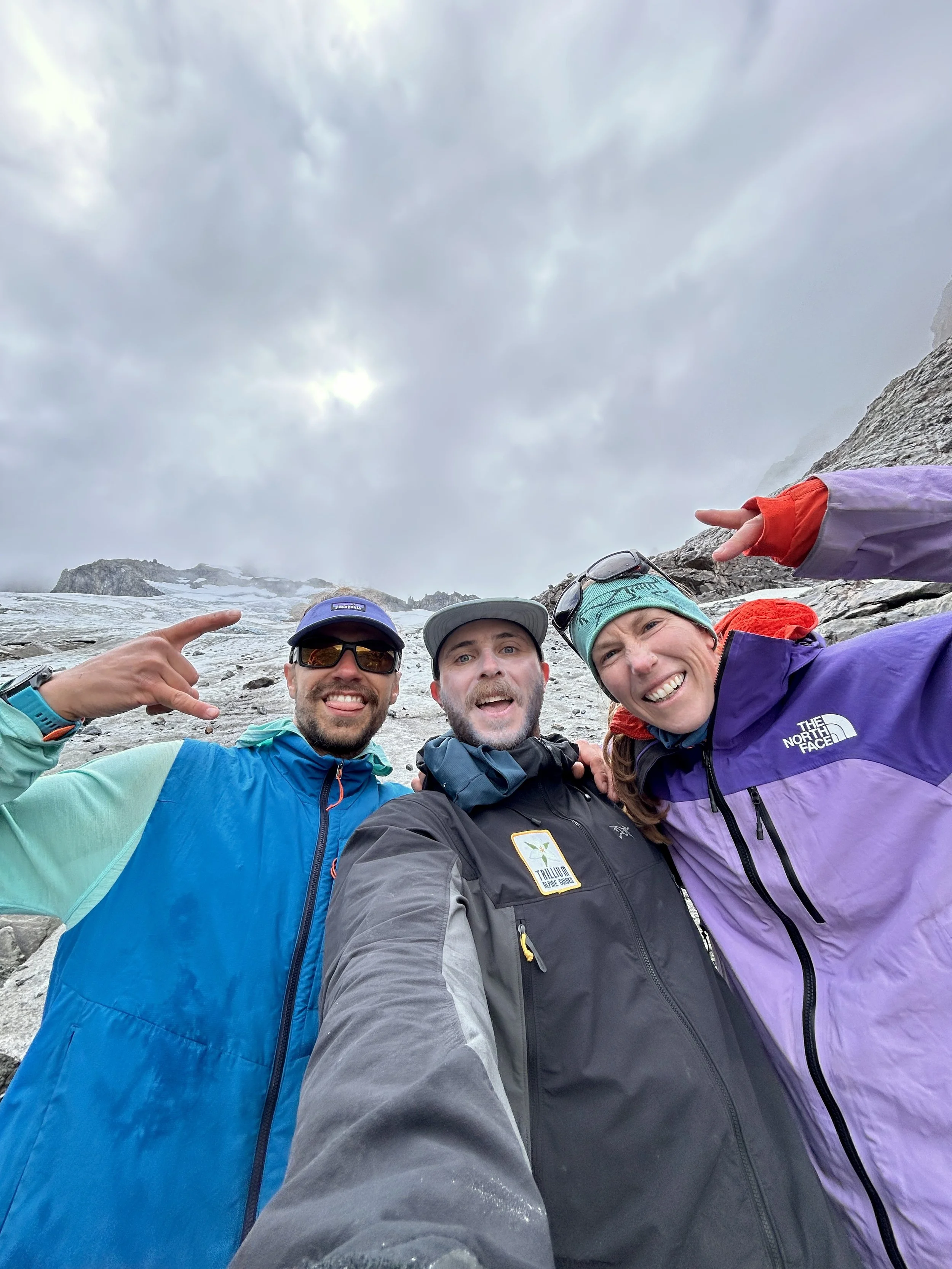
Hannah McGowan! Rock star! That was the nudge we needed to get up and pack our bags. Even though we had a ton of gear cached up at Paso Superior, our backpacks were still bursting at the seams with all the food and kit we'd need for five days in the mountains.
I am not superstitious, but I do believe you shouldn't throw any curveballs before going big in the mountains, so I made sure to honor the Chaltén morning ritual and lost a game of cribbage to Nate.
Hannah showed up and quickly transferred most of the gear out of our backpacks and into hers. Rock star, if you weren't already convinced.
The three of us wound our way up the trail toward Laguna de los Tres, leaving the sleepy morning in Chaltén in the valley below. The hike felt far more casual than when we'd done it coming down from our Guillaumet carryover. Then again, it wasn't at the tail end of a twenty-mile day, and Hannah was carrying almost everything for me. Either way, it went by quickly, and we were soon reshuffling gear back into our packs and saying goodbye to Hannah, who was leaving Chaltén the following day.
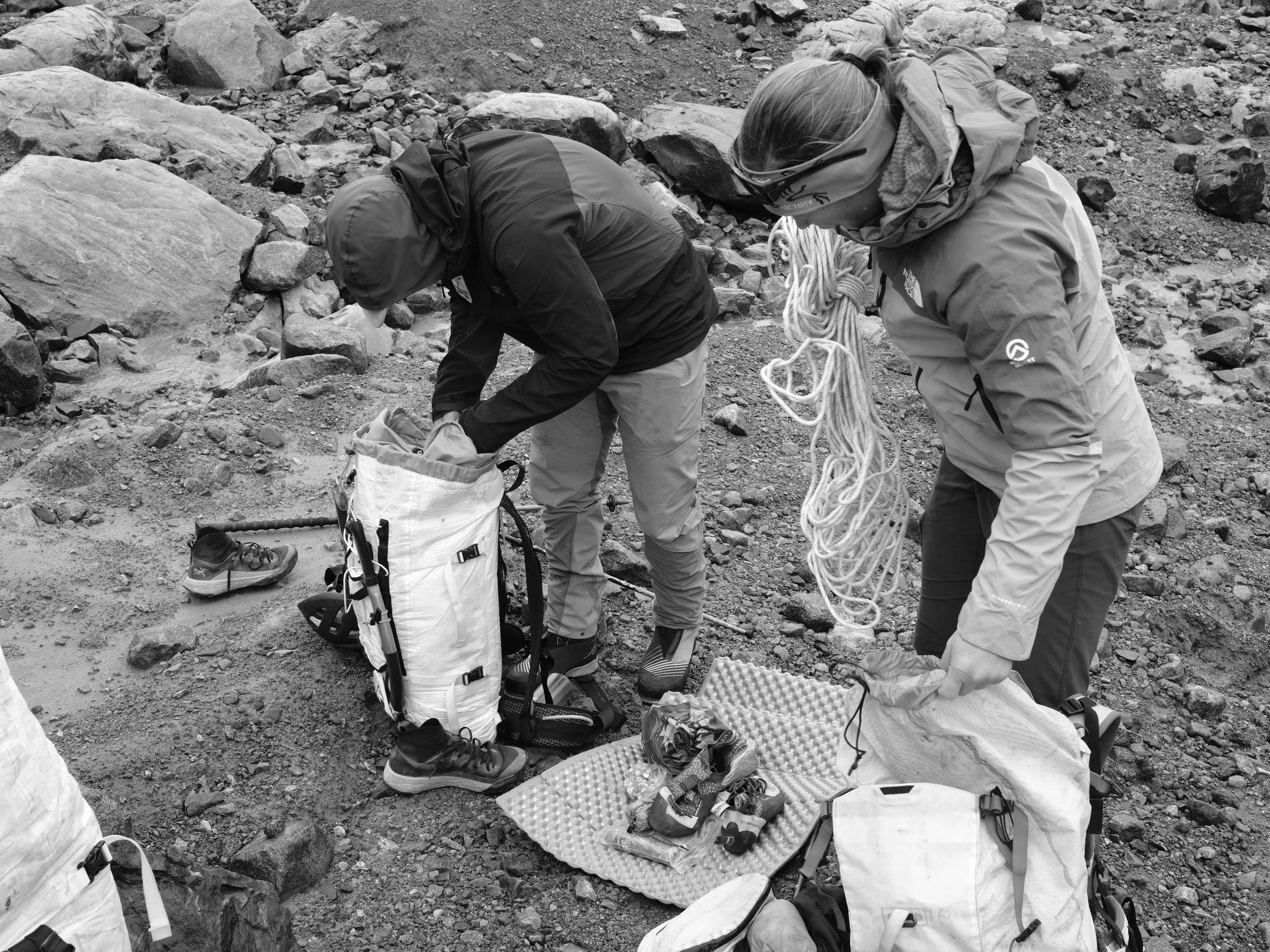
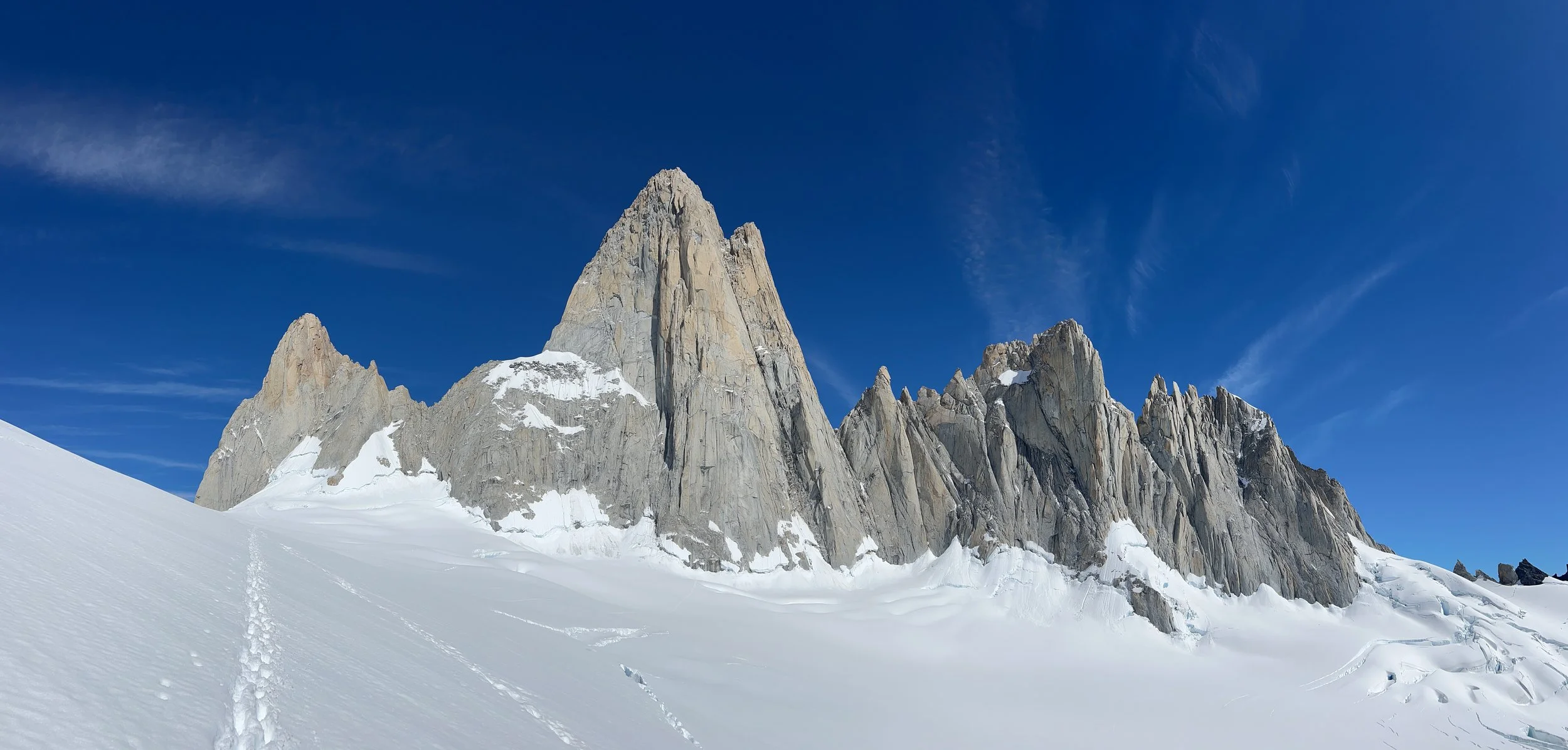
Nate and I continued up the glacier to Paso Superior, finally getting views of Poincenot and Fitz Roy piercing through the heavy cloud layer. The eastern faces were totally soaked from the small storm, which confirmed our call to sit out another day before our attempt.
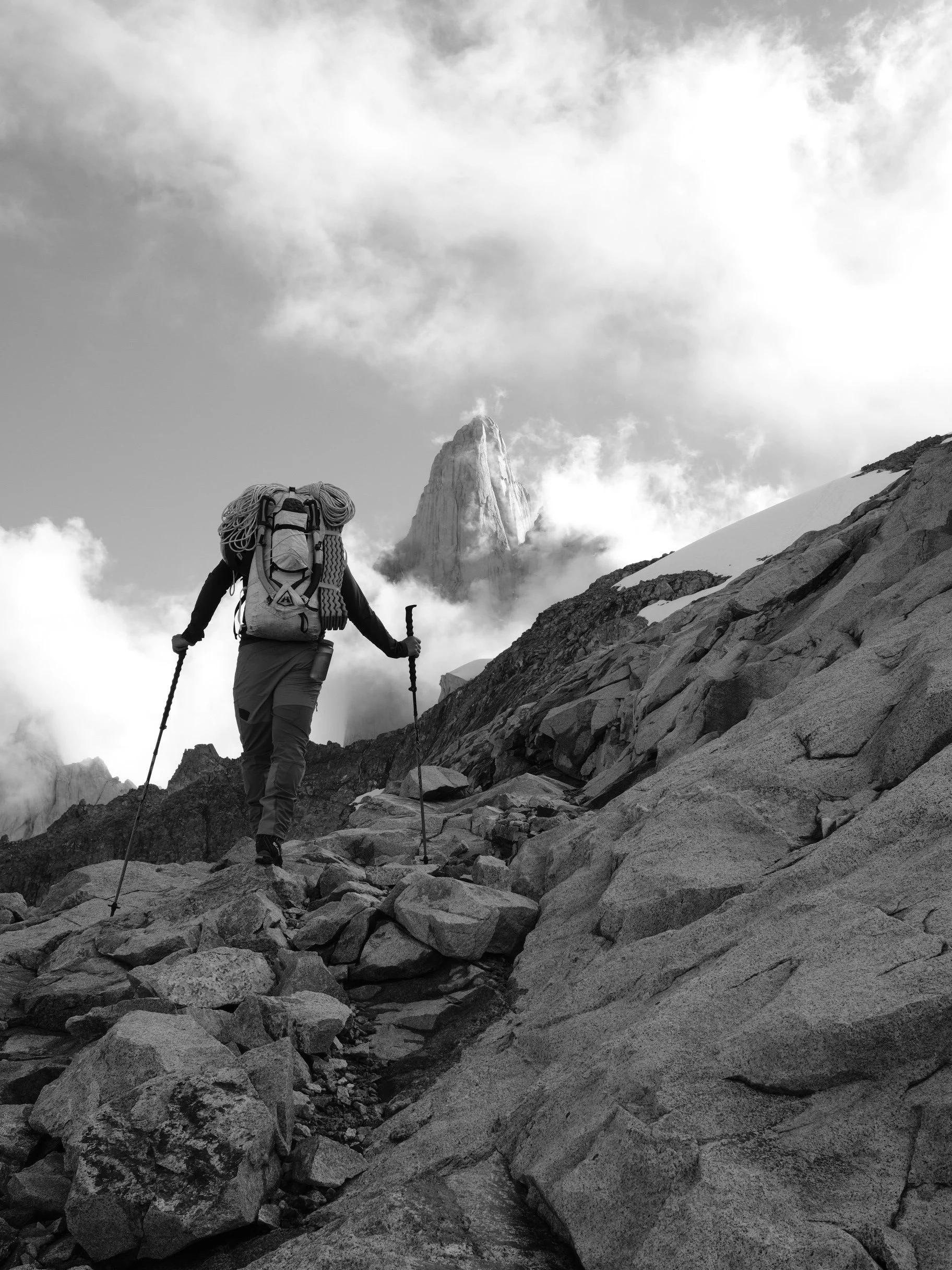
A few parties were already at camp: a team of three local guides from the Comisión de Auxilio El Chaltén, our friends Nick and Nick from New York, and Sam Hennessey and his partner, all of them preparing to launch attempts on Fitz Roy over the next couple of days. Nate and I made clear that we weren't planning to climb until the day after, hoping it would help the other teams coordinate their timing on the route and, most importantly, ensure there was no dilly dallying through the Brecha de los Italianos.
We picked a tent site at the upper camp, knowing it would swell to capacity over the next couple of days. Everyone had seen this window as their chance to climb Fitz Roy, the crown jewel of Patagonia.
The following day was as splitter as ever. Calm winds, no clouds, warm in the sun, and downright pleasant in the shade. Nate and I sprawled out like lizards on the rocks and played Farkle to pass the time. Anticipation fizzed from my toes up to my fingertips as we watched climber after climber crest the horizon and stroll into camp.
Is that Brad? No. Surely this is Brad. Nope.
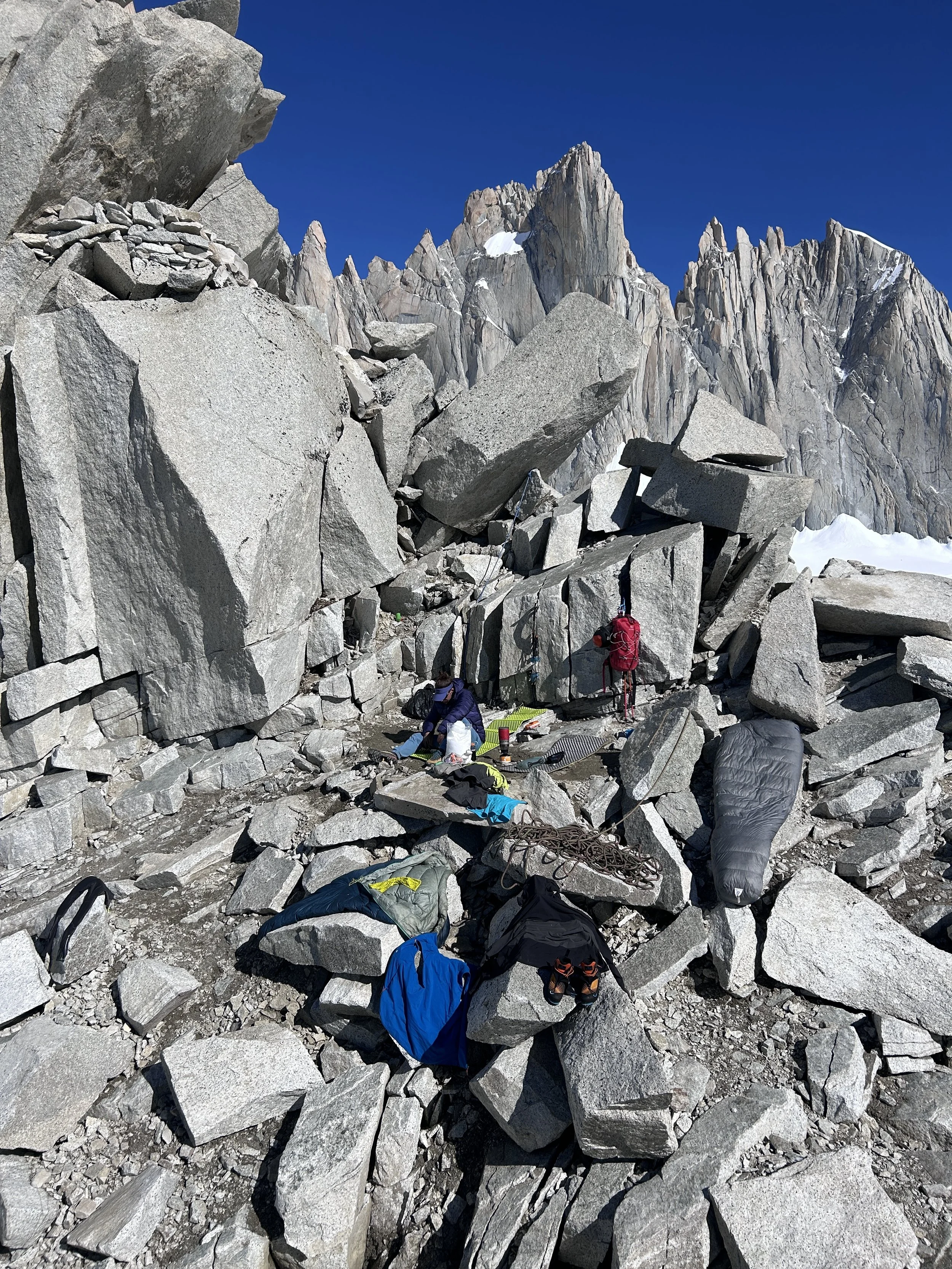
The lower tier of camp, including the area we had been using as the bathroom, filled up with several more tents. I started to feel anxious. Most of these climbers were likely here for Fitz Roy too.
I started to think we had blown our chance. Maybe Brad had decided to stay in town and we would end up sitting out the window waiting for nothing. Should we go now? Maybe we should get up to La Silla tonight and bivy at the base of the route?
Right as my doubt peaked, a lone figure crested the horizon.
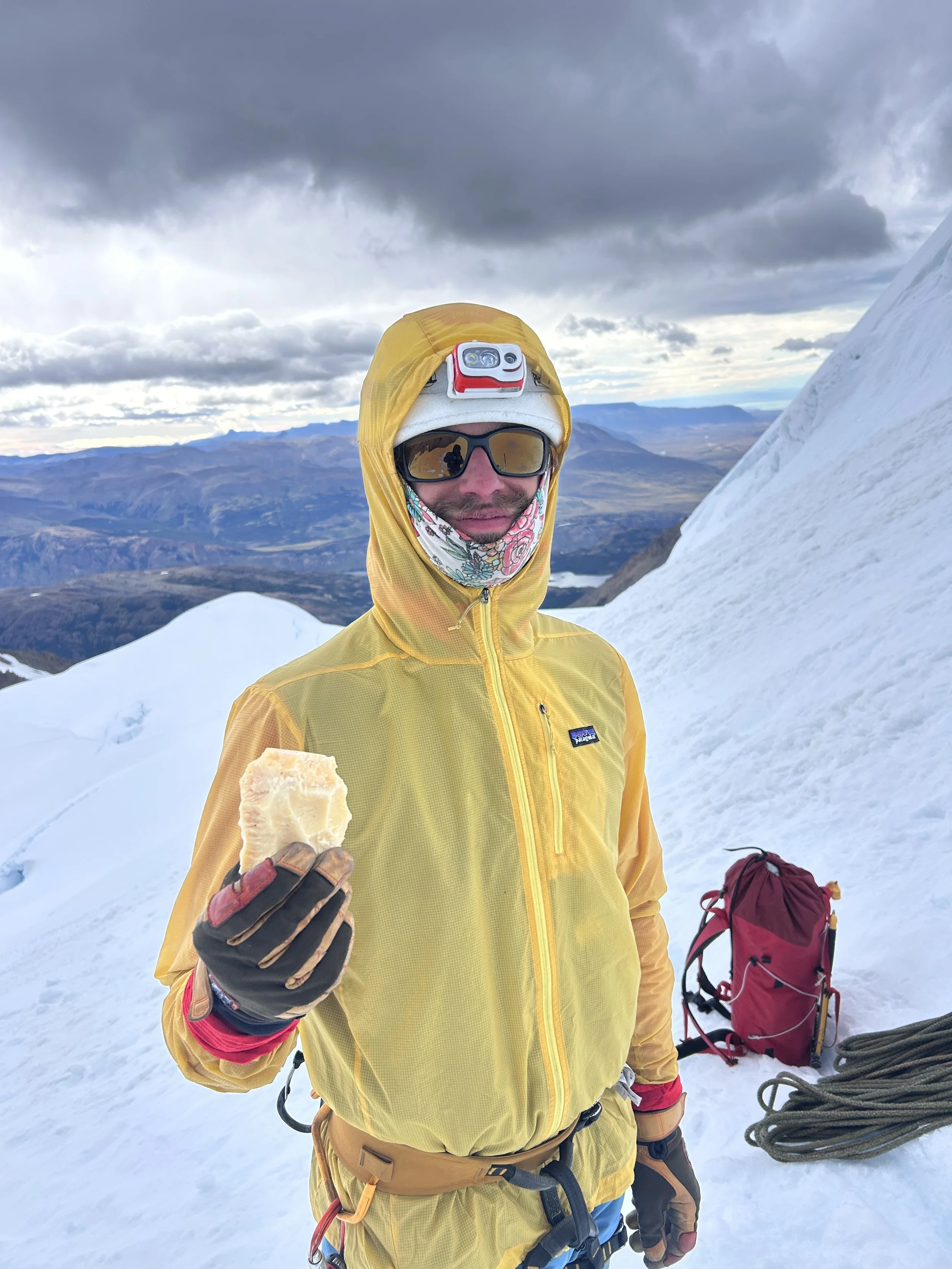
There he is! Brad unloaded his small backpack, which mostly contained food, including a kilogram block of parmesan cheese, but was curiously light on warm layers.
We welcomed Brad into camp and caught up briefly before the conversation swung to the objective at hand. Over the course of our day at camp, Nate and I had settled on the Franco-Argentina route, a very direct line that follows a series of stunning cracks from the large bench feature on the south side of Fitz Roy called La Silla, up the southeast ridge straight to the summit. We had rehearsed the pitch-by-pitch breakdown throughout the day and had it committed to memory. We had also researched the Californiana as an alternative, which also starts from La Silla. The Californiana follows more of a path of least resistance up the southwest side of the mountain. Less sustained climbing, but in the shade all day, and tomorrow promised to be a cold one.
We all agreed that climbing the mountain camp-to-camp in a single push would be a proud achievement and would also let us carry lighter packs. We decided that bringing a stove would give us the margin we needed to pull this off while still leaving the option to melt water or warm up if things got desperate.
We tucked into our sleeping bags and set the alarm for 2 AM with the goal of leaving camp at 3 AM.
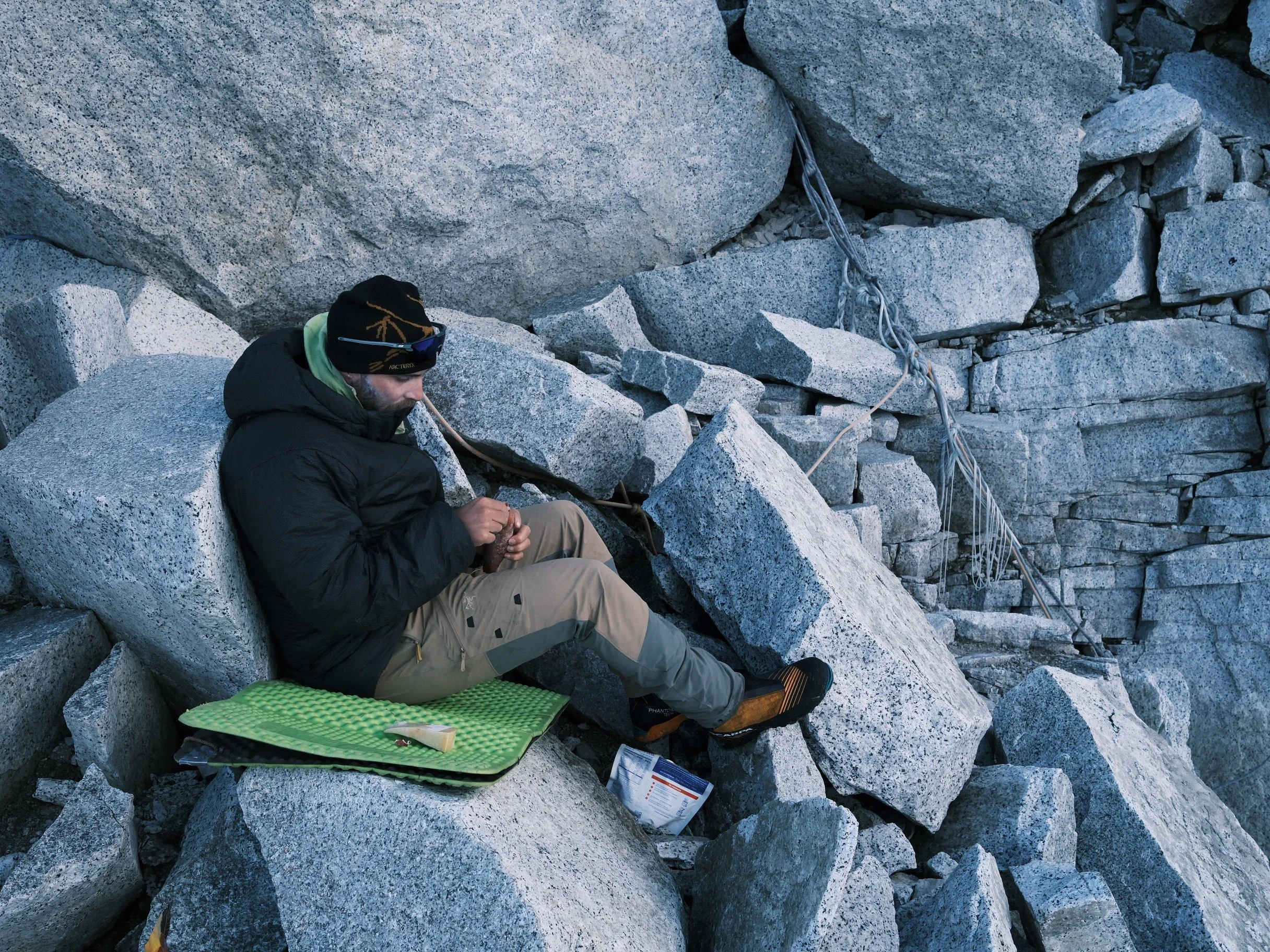
My alarm blared and I rolled over and fired up the stove like a robot switched on to perform a single task. It just feels easier to bypass the brain and simply execute a function at 2 AM. The inertia of a warm sleeping bag is hard to overcome, especially if you think about it too much. We downed our coffee, packed up the final bits, and scrambled down onto the glacier.
We soon found ourselves deep inside the clag of a low-hanging cloud. It reminded me of climbing on Mt. Hood, where you often begin below a marine layer and then ascend straight into it, hoping to pop out the top into clear sky. The surest sign that you are inside a cloud is that you are getting soaking wet but it is not raining. It is just generally wet all around you. This felt more like being inside a snow globe of suspended snow particles. We could navigate generally west toward the mountains, but without good visibility we continuously ran into a labyrinth of crevasses that forced us off any direct line, winding through the cracked maze in long diversions.
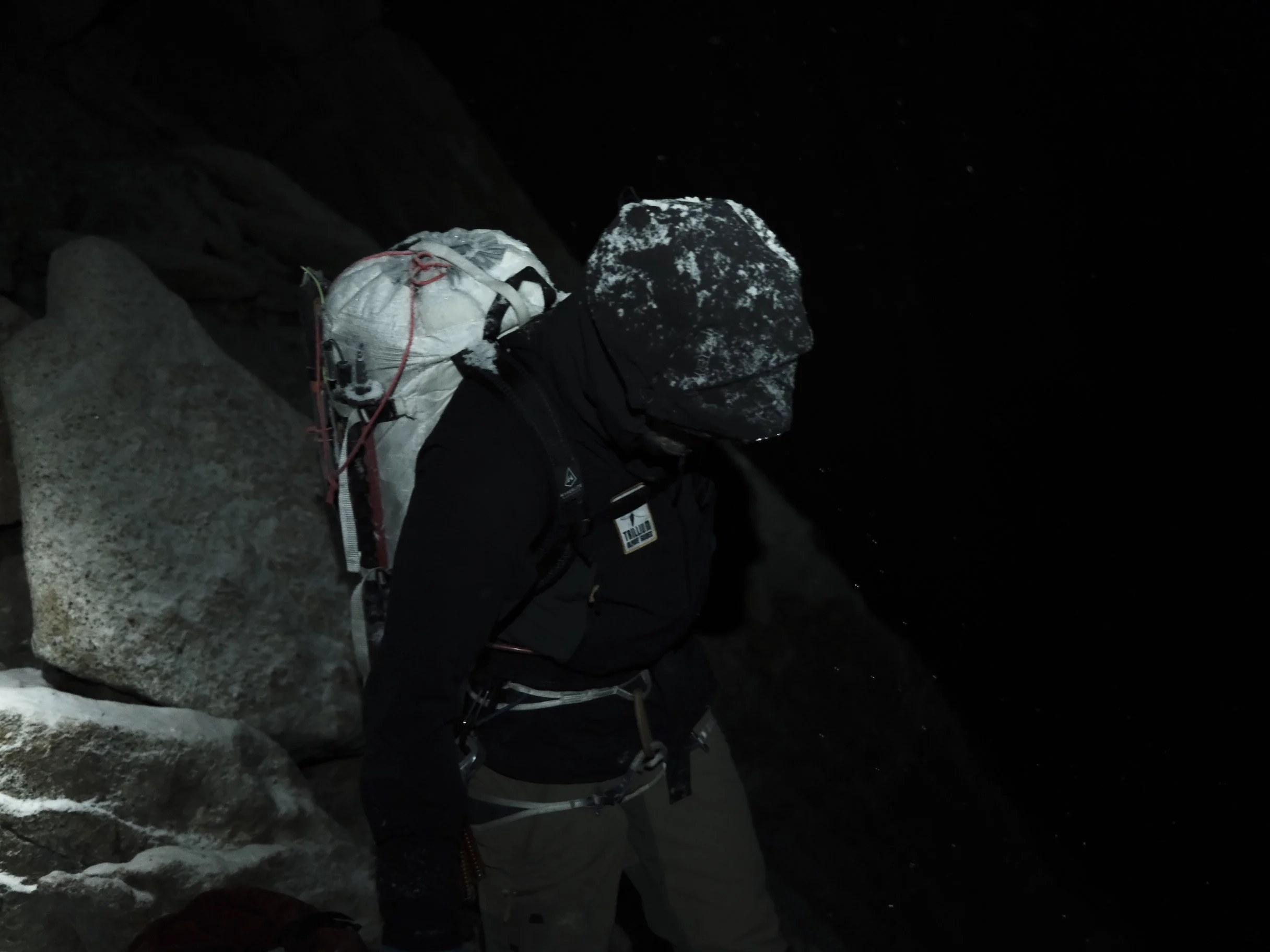
Eventually we began ascending an ever-steepening slope that marked our departure from the glacier. No one was entirely sure if we were climbing the right snow gully or not. After some steep traversing and downclimbing, we found a solid bootpack and followed it upward, hoping it was taking us where we needed to go. The higher we climbed, the more stubborn the snowfall became. Snow seemed to come from every direction except directly above. Instantaneous snowflake creation. The snow gully gave way to scraggly rock. Our combined mountain intuition allowed us to take turns picking a path of least resistance upward. A potential dead end lurked at every turn.
Snow stacked up on the granite slabs and obscured the view above. We all tacitly understood that these were not the conditions for climbing steep, sustained cracks. If it kept snowing like this, we would not be able to climb at all. Grasping at the final straws of the situation, we agreed that if we were going to make any kind of attempt, we would have to shift to the Californiana and its weaker, ledgy terrain.
To our surprise, we punched through the top of the snow squall right as we reached the Brecha de los Italianos. A beautifully clear and starry sky with just the early tinge of alpenglow on orange granite greeted us on the other side.
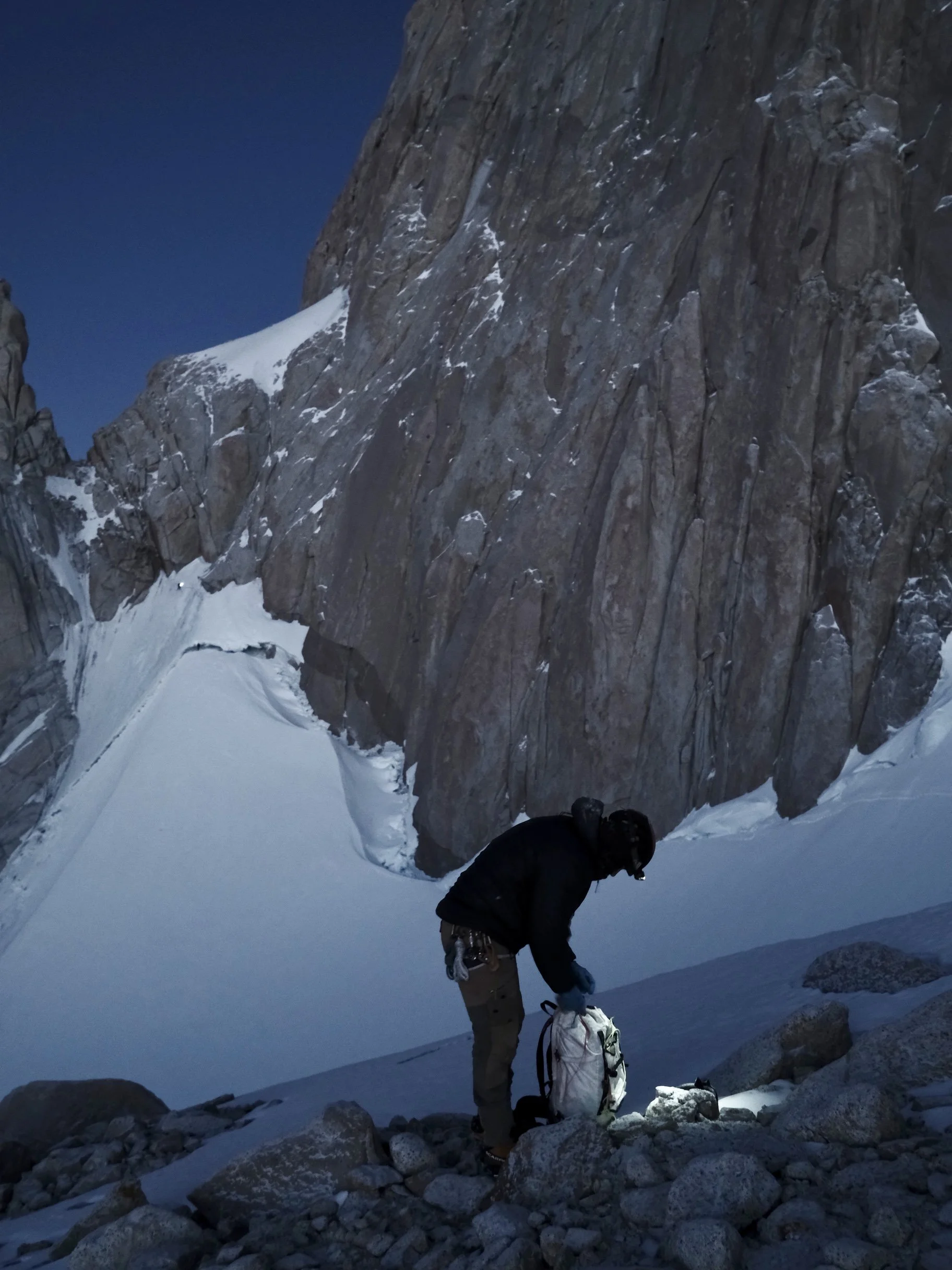
We took a break on the first flat ground we had found since stepping off the glacier. It was 5 AM and the sun was just barely illuminating the horizon. Brad reached into his backpack and found a disaster. Nearly the entirety of his three-liter water reservoir had emptied itself into his pack, soaking everything. He turned his climbing shoes upside down and water gushed out. He wrung his gloves dry and pulled on his saturated down jacket in an attempt to dry it out with body heat. Worst of all, the block of parmesan had been sitting in the bottom of the bag. We passed the block around and took bites off it like we were eating an apple, working through the mushy exterior until we decided it would be safer in my pack. That could have been the straw that broke the camel's back, but it did not deter Brad. The thought of bailing did not cross his mind.
We followed strands of old fixed rope past ancient pins along the ridge of the brecha and up onto the large flat plateau of La Silla. It was 6 AM and the sun was finally rising. We took a moment to soak it in and examine our options. Little did we know it would be the last time we'd be warmed by the sun until reaching the summit ridge.
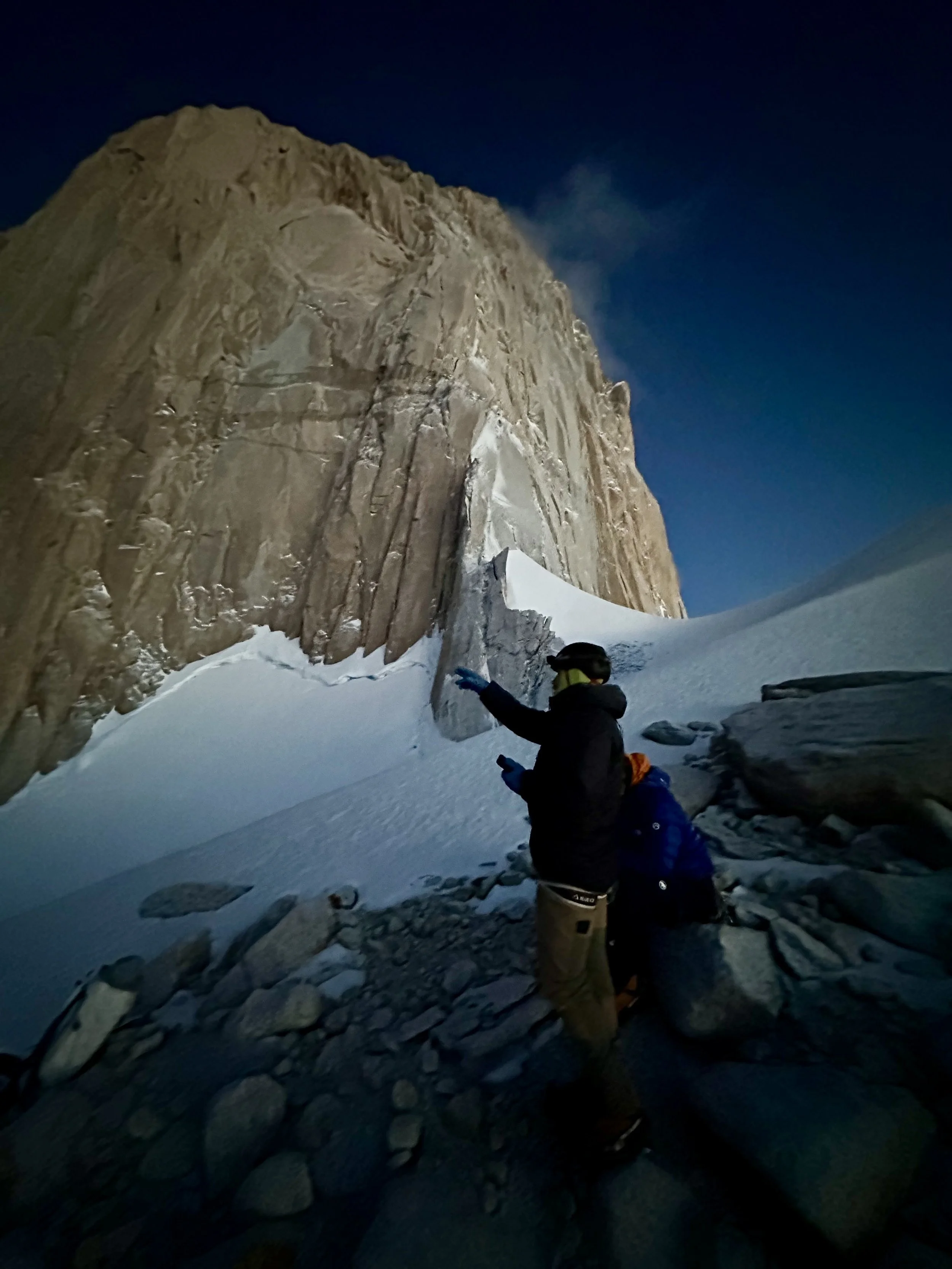
The bottom thousand feet of the Franco-Argentina was completely plastered in fresh snow from the morning storm, so we quickly and unanimously decided to traverse La Silla to the west and climb the Californiana. Brad left his climbing shoes under a rock. They were waterlogged and useless.
The western end of La Silla falls away in a dramatic icefall toward the Torre Valley, and the only way across is to stay high on the crest of the glacier where it pulls away from the south face of Fitz Roy. Traversing the crest off the plateau is like walking a tightrope. The glacier dropped thousands of feet to the left and Fitz Roy towered thousands of feet above to the right. The angle was so steep that we could step into the bergschrund and stand upright on its lower lip because it was completely flat inside. Brad pulled out the rope and I belayed him up a final step of ice to a rock ledge that marked the start of the climbing route.
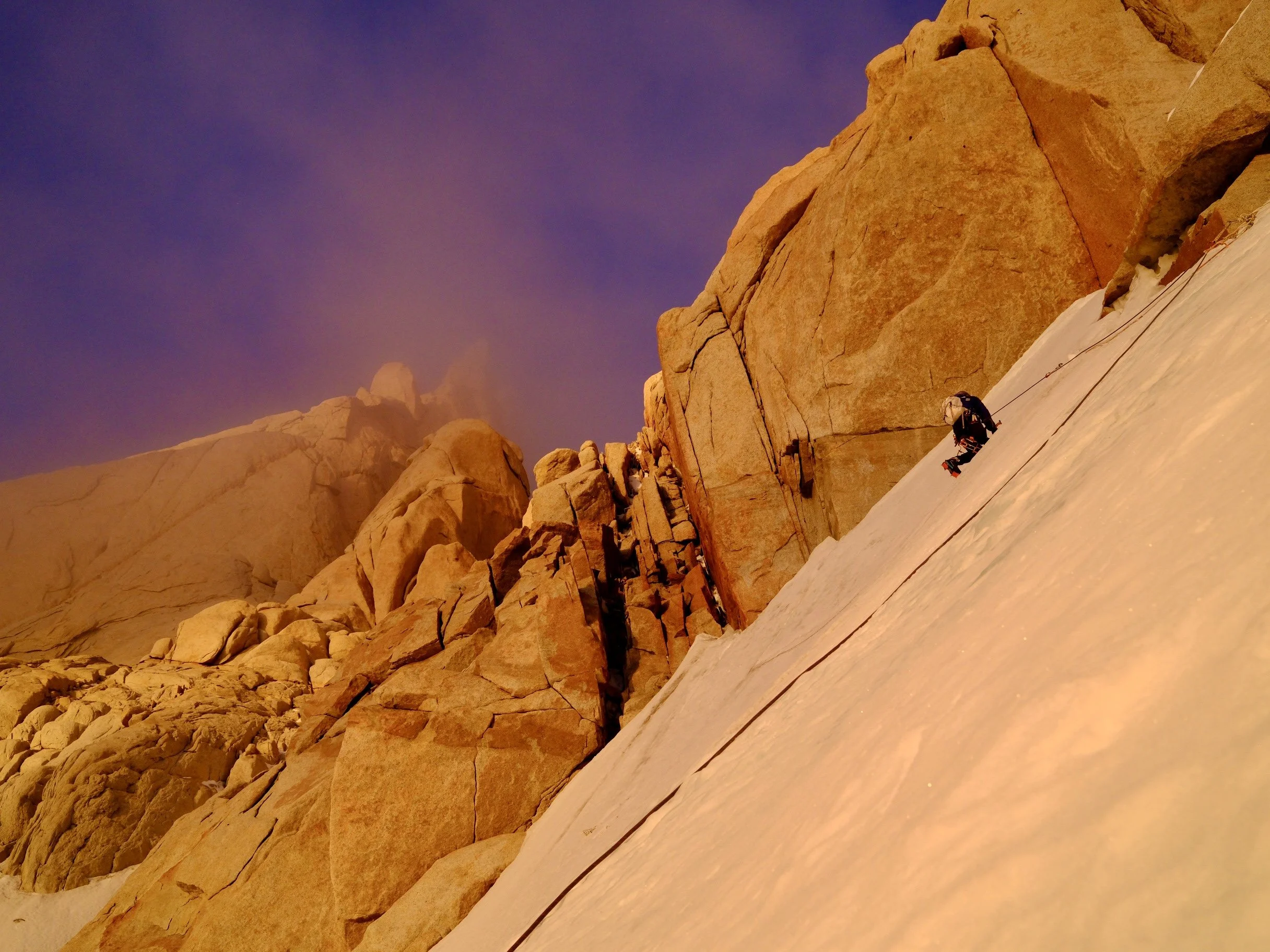
Nate took the first lead block. He fired up a short vertical step of rock to a big snowy plateau. Feeling the wind of momentum at our backs, we charged up toward the next wall of granite and caught up to the team of three Argentines from the Comisión de Auxilio El Chaltén. They must have camped up there because we had not seen them at all on the approach. Their leader was pulling out aid ladders and making slow progress up a thin seam.
We joined them at the stance and realized they had chosen to aid the crack to avoid an obvious chimney that was choked full of snow. Our plan up to that point had been to leapfrog using a fix-and-follow technique, with the leader climbing in rock shoes while the followers stayed warm in mountaineering boots and pulled on the rope where needed. Nate set off into the chimney in his climbing shoes, but the snow on the rock immediately negated any advantage they offered.
I climbed a few moves trying to preserve the free climbing ethic that I desired but I quickly got over my ego and pulled on the rope to bypass a section of overhanging icy rock. Nate was back in his mountaineering boots at the belay. Even though the face above us stretched infinitely far in every direction, the weakness we were confined to forced us into the same narrow channel that the Argentines were occupying ahead of us. We had no choice but to shiver on the small ledge and let them climb out above us. Brad and I urged Nate to pass them. We did not have the time nor the resources to spare. The truth was, there was no way he could have passed them at that point.
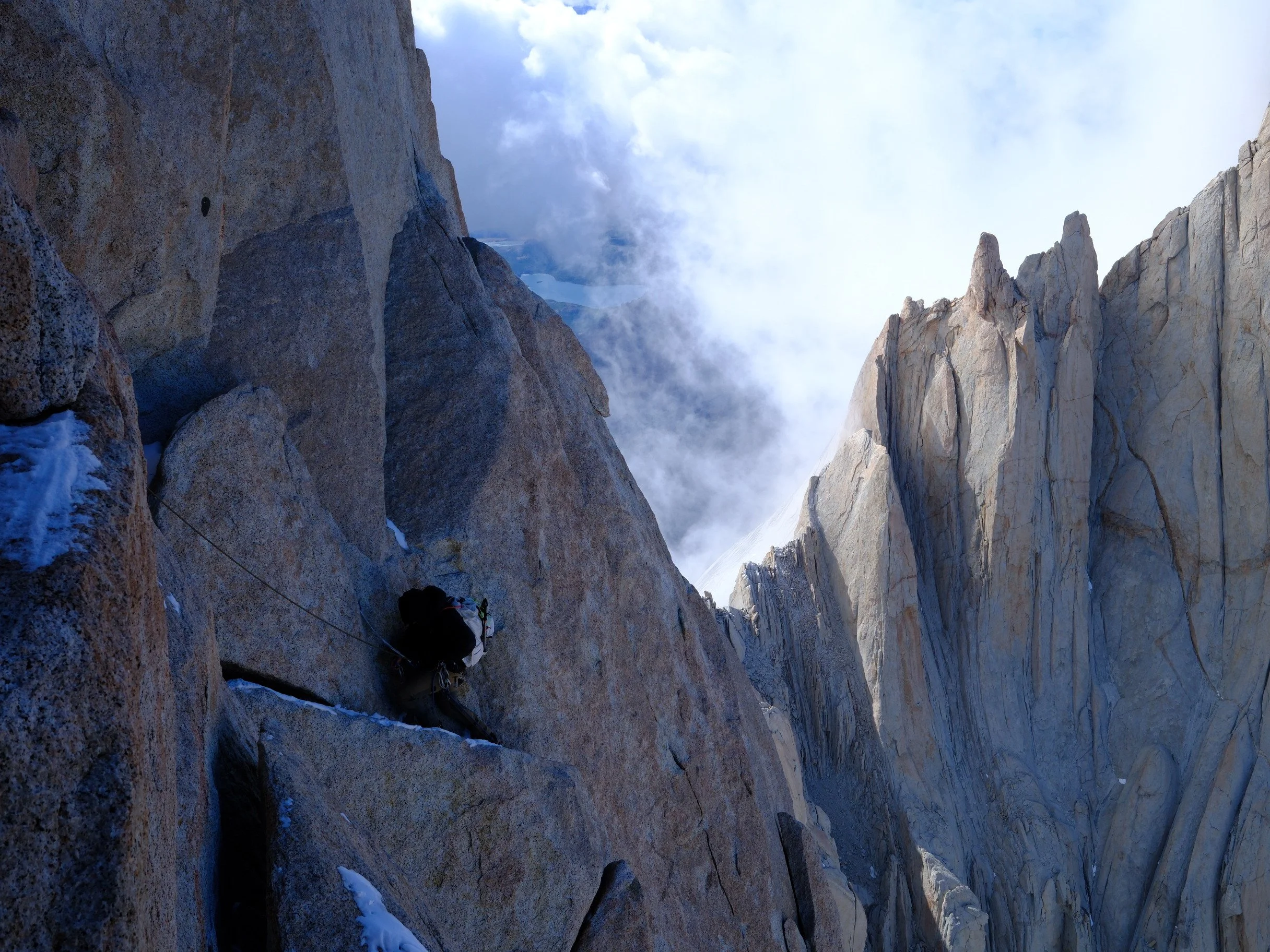
Nate took us up several more pitches, including an incredibly aesthetic layback crack that traversed into the base of a chimney so large that it swallowed him whole. Nate led both pitches in his mountaineering boots. Hell yes, brother!
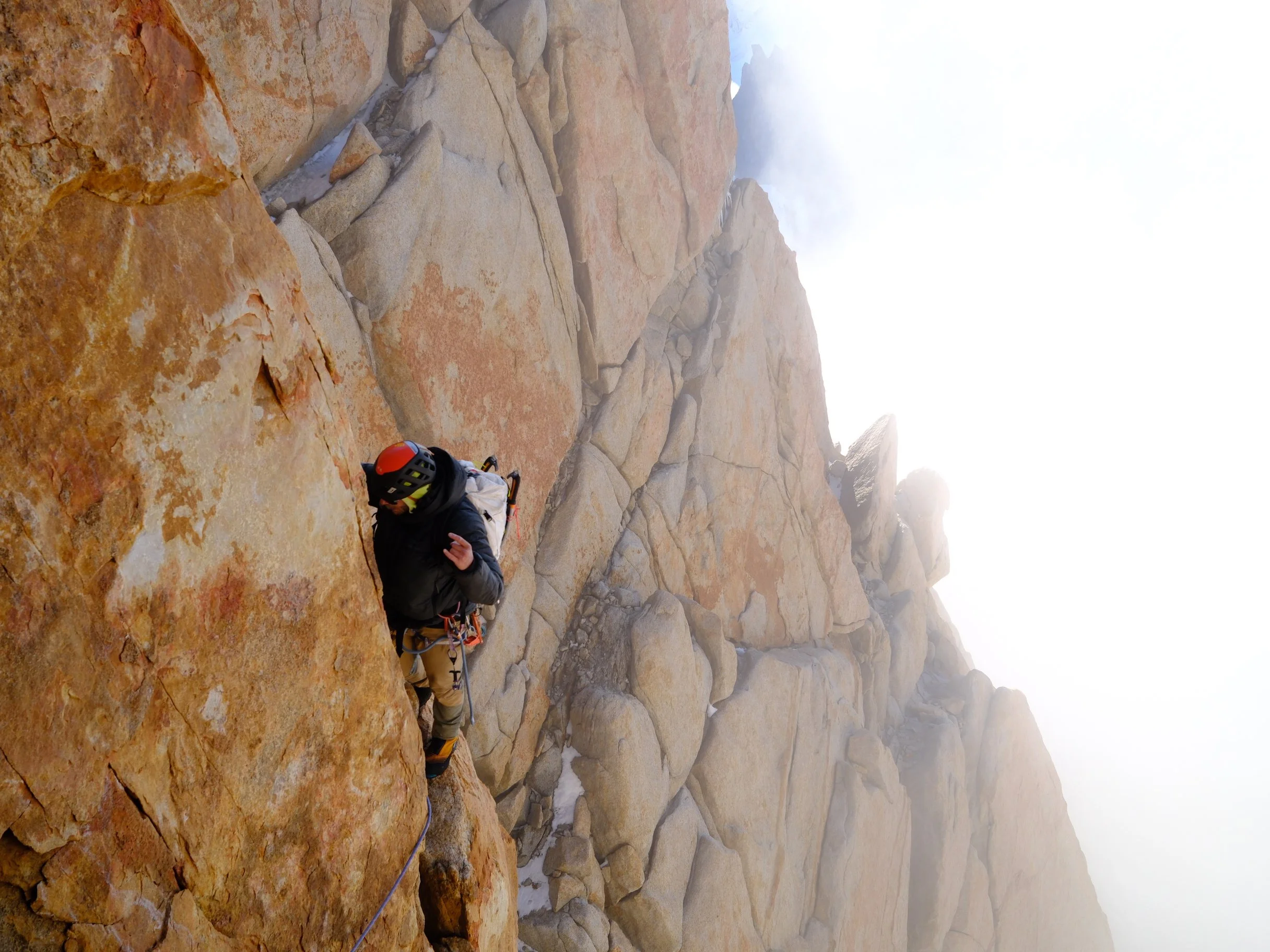
Nate handed the lead over to me around 11 AM. I set off from a ledge and hand jammed a snow-filled crack. My mountain boots were too wide to fit securely in the crack, but I kicked them in as hard as I could and bumped my hands up to the next snowy jam, which required a bit of excavation. It wasn't glorious, but the pulse of responsibility to keep the rope moving up the mountain had taken over.
I caught up with the Argentines again, but this time the wall ahead offered several cracks and a real opportunity to pass. They had committed to the widest crack on the far right, which was the only one that looked climbable in mountain boots. I swapped into my rock shoes and blasted up a series of intricate hand and finger cracks on the left. Brilliant climbing. Stemming, jamming, and just a touch of chimneying. Climbing in rock shoes felt like flooring an F1 car, especially after climbing in mountain boots, which is more akin to a baby giraffe learning stick shift in the family sedan. I pushed the rope higher, pitch after pitch. The demand of the sharp end kept my fingers and toes warm, or at least gave me something to think about other than how cold they were.
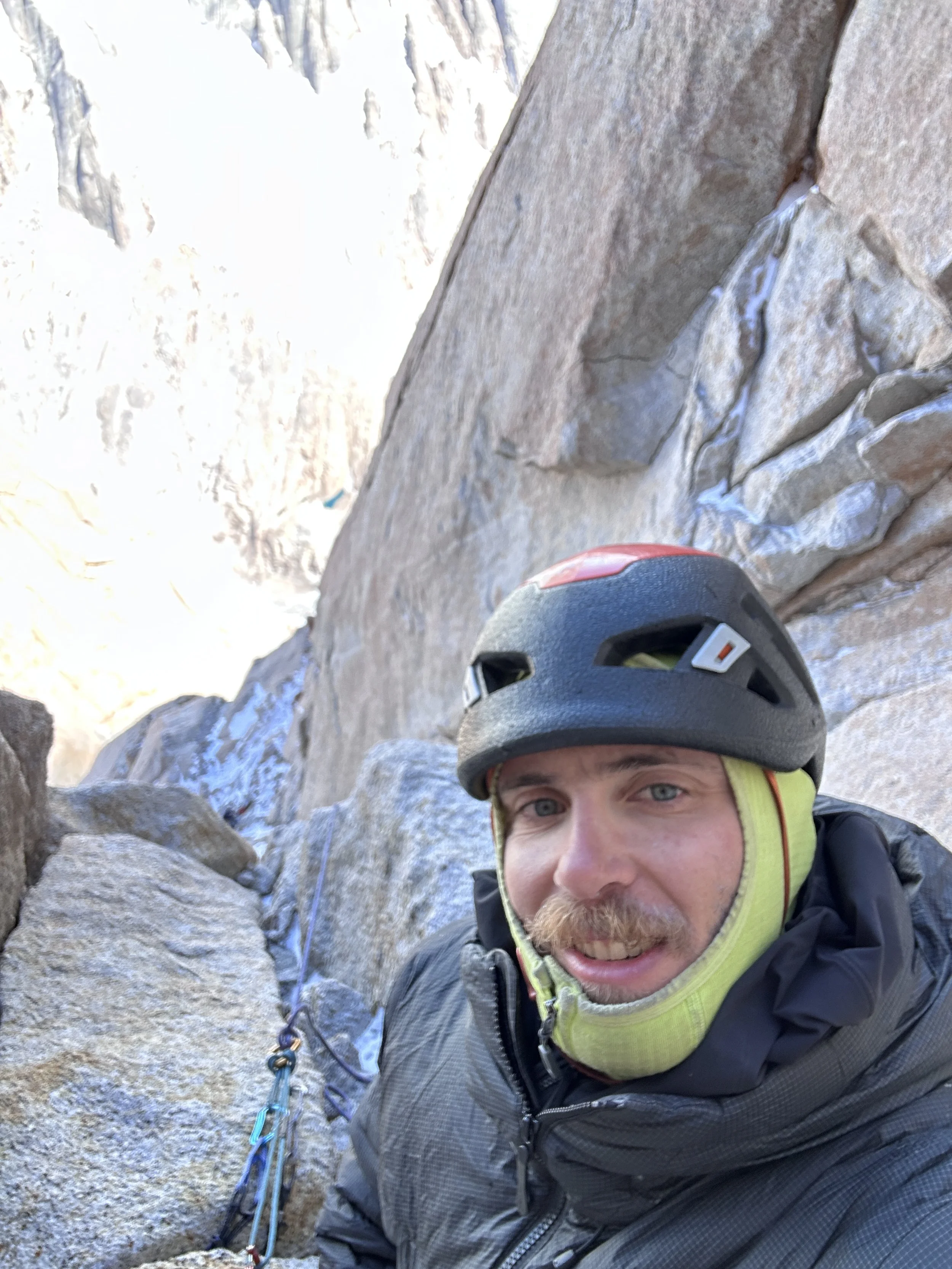
Brad took over the lead at 3 PM. We were on a giant ledge just beneath the ridge that would bring us to the summit block. He immediately found himself chimneying into a deep crack filled with ice, wedging his body into the fissure to free his hands and get his crampons on. The chimney spit him out at the base of a bulging finger crack, the final crux before the summit ridge. He pulled on Nate's rock shoes, fought through the awkward layback, and ran the rope out over the final slab to the sunny ridge above the Supercanaleta. We sat there for a moment. We weren't at the top, but photosynthesizing in the sun after twelve hours in frigid shade felt as victorious as any summit I had ever stood on. We still had a ways to go, but we were closer than we had ever been.
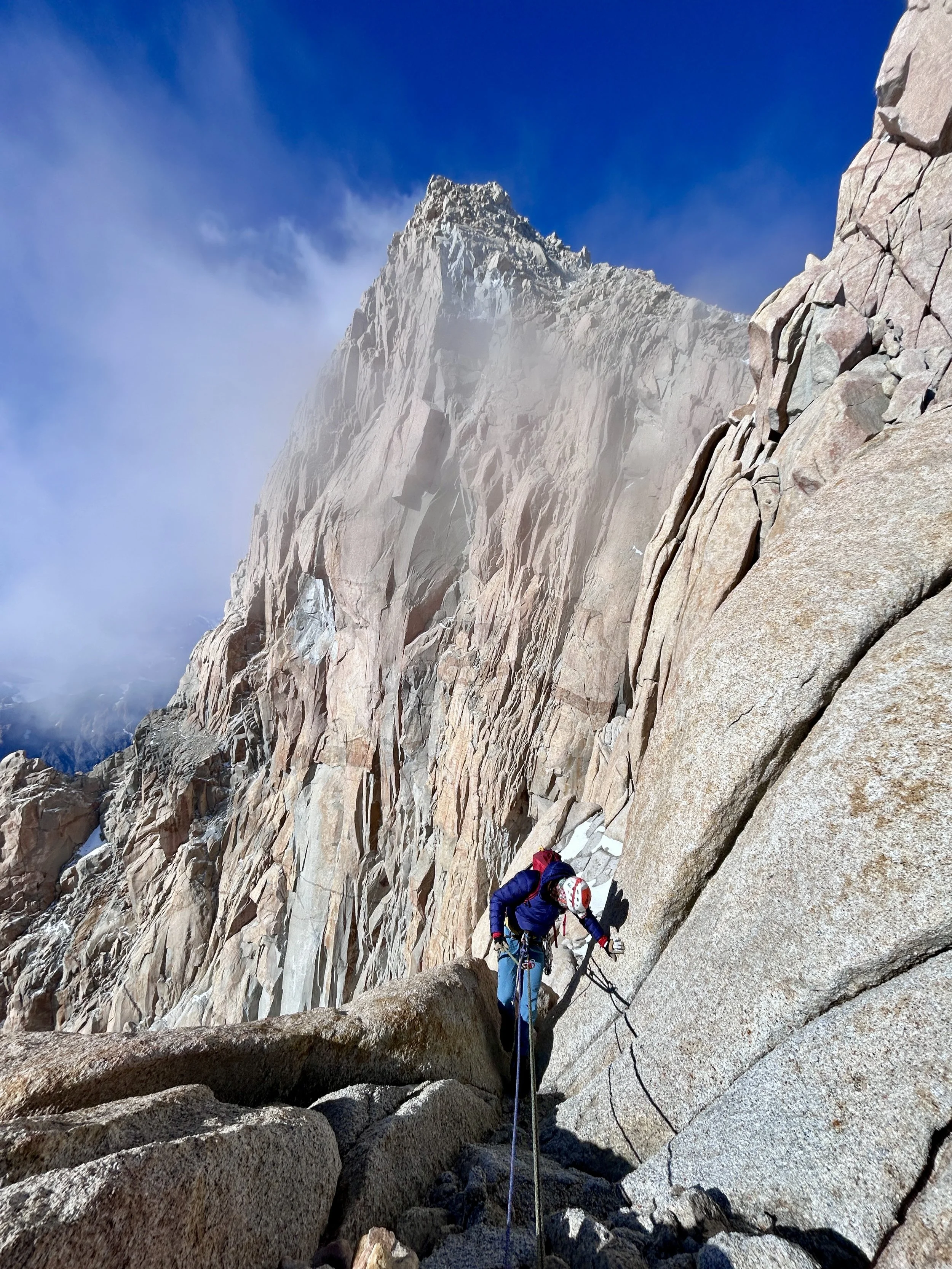
Navigating the final ridge proved to be a non-trivial effort. We had traversed too low into the Supercanaleta and now needed to reclimb a couple of pitches to regain the ridge. It was 7 PM and we were burning time we did not have. Our top priority shifted to finding the rappels, and if that meant not summiting, then so be it. We knew we'd have no chance of getting down if we didn’t find the top anchor before dark.
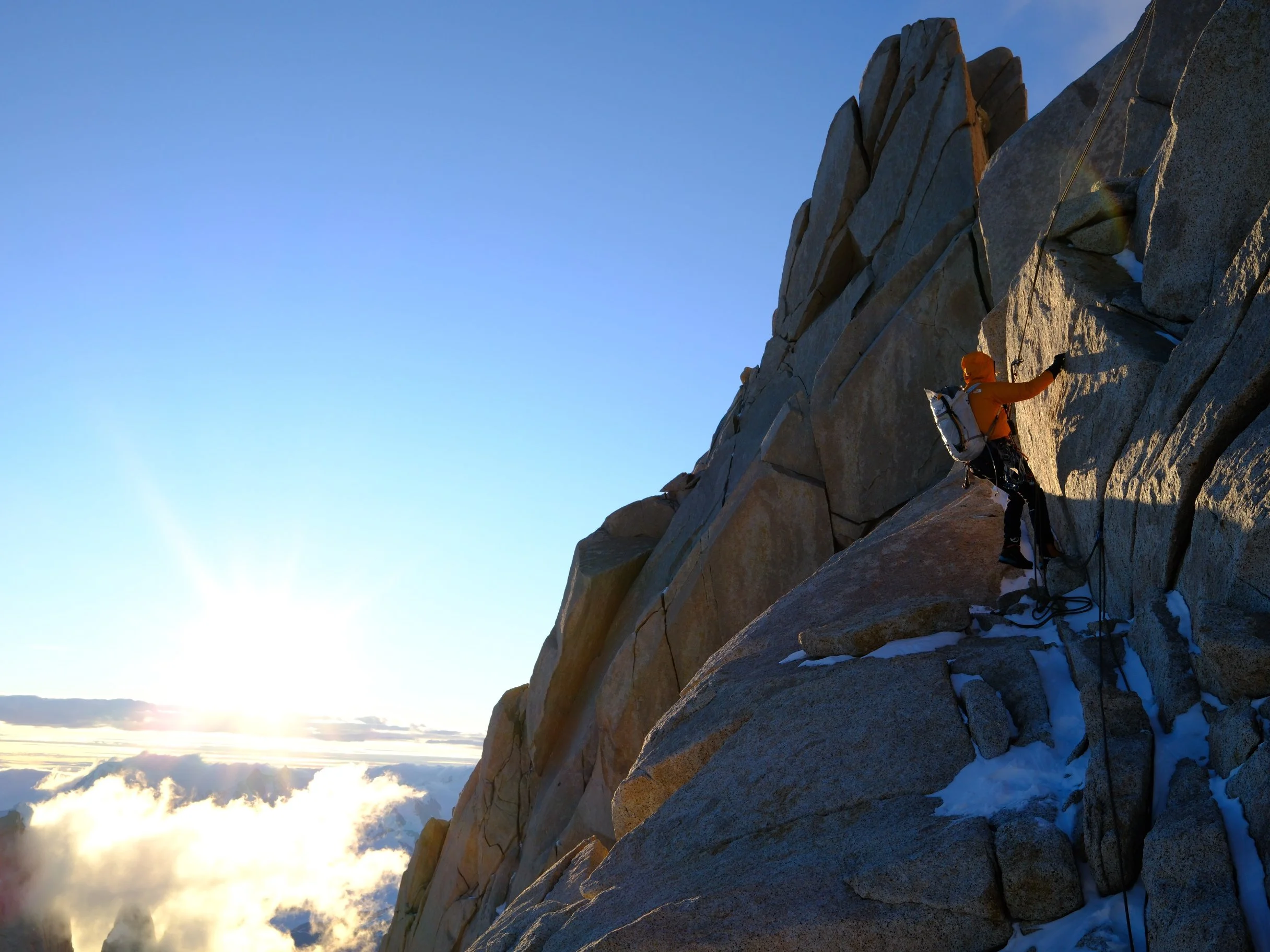
Nate took over the lead and got us back on track to the base of the summit cone. We unroped and put on our crampons, picking our way through scrambly rock and snow toward the summit of Fitz Roy. We managed to find the first rappel anchor at around 9:30 PM in the last light of the day. The anchor sat only about two hundred vertical feet below the actual summit. We decided to go to the top because we’d be rappelling the entire mountain in the dark regardless.
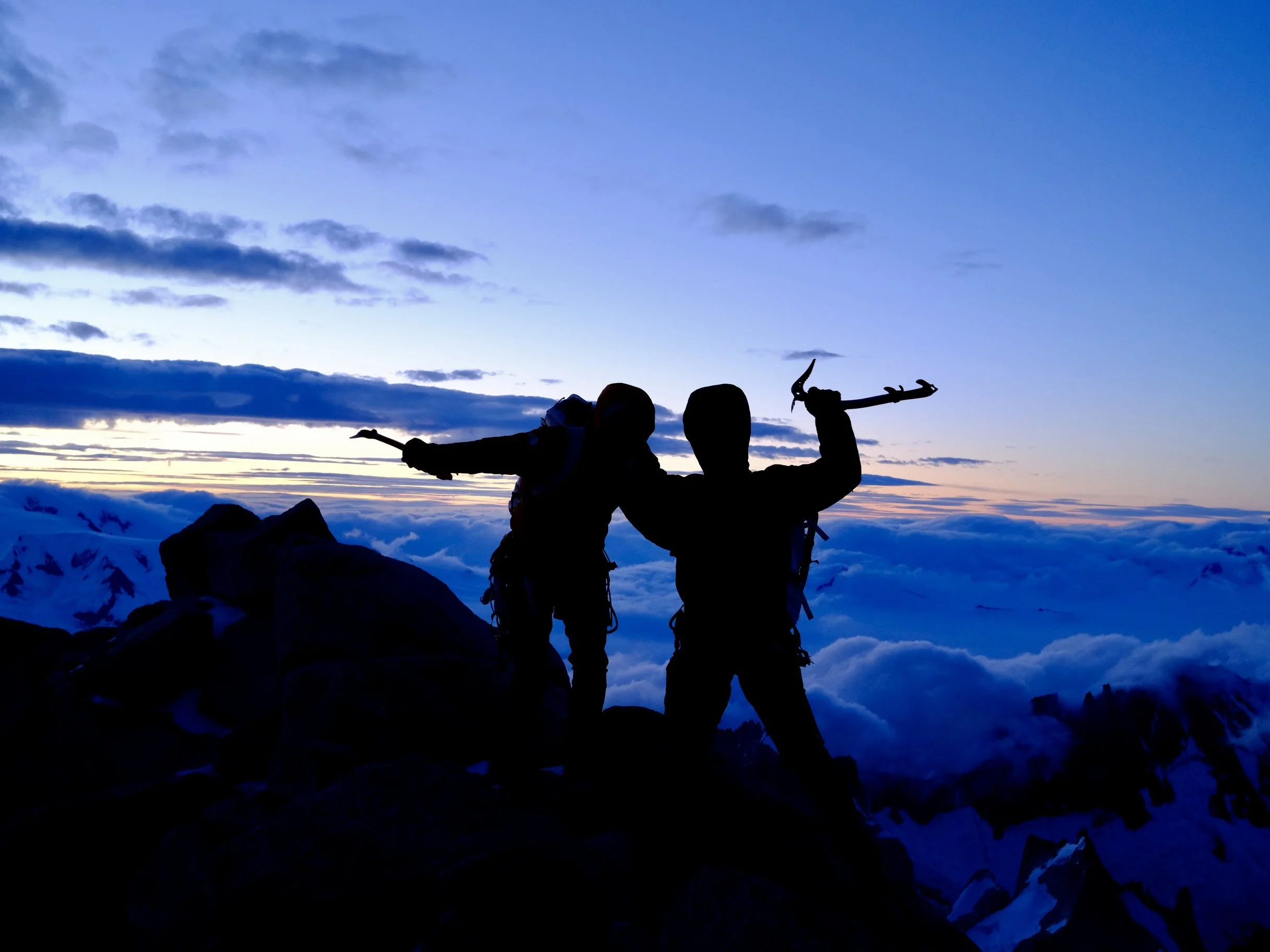
The three of us embraced on top of Fitz Roy and watched the final deep purples and yellows of sunset tuck into the blanket of darkness.
Brad took the first rappel and swung around at the end of the rope trying to find the next anchor. It was cold and dark. I tried to yell instructions down to him but the wind carried my voice off into the void.
I was the only one with a picture of the rappel line, so I took over. We were all cold but Brad was frigid. Nate helped keep him warm while I led the rappels. Time ceased to exist. My world shrank to the small orb of life illuminated by my headlamp. Finding the next anchor was the only thing that mattered. Like a train barreling through a tunnel with nowhere to go but through. No stopping. It is not an option. Keep moving. Gusts of wind ripped through the night and pummeled us with spindrift. The cold cut through our layers and stiffened our faces. Brad was in a bad way. I offered him the emergency blanket from the medkit. It felt like a pretty empty gesture, but maybe it would provide relief from the wind.
The next rappel took me over the edge of the summit snowfield into overhanging terrain with the three-thousand-foot vacuum of Fitz Roy's east face yawning below. The optical illusion of the pearly white glacier compressed and expanded the space beneath my feet all at once. We were in an infinite purgatory of rappelling. Every rope length we descended, the glacier looked close enough to touch and yet it never got any closer. The void was gnawing at my sanity. Each time I cast off from an anchor, I was convinced there would be nothing waiting below. I held the nightmare of getting lost in the vertical ocean at bay as long as I could, but the flood of pressure pounded at the levies of my mental fortitude. At some point I drifted us off the traversing rappel line and was forced to build an anchor with nuts. The anxiety of leading the team into oblivion had exploded every last nerve I had.
Nate joined me on the ledge and saw the fatigue in my eyes. I was relieved to be off the sharp end and eternally grateful that without speaking, Nate understood and was willing to assume the responsibility that had twisted my mind into a pretzel.
We were forced to leave a couple cams at an anchor to get us to a big snow ledge that we had identified as a key landmark, the point where the Franco-Argentina link-up diverges from the Francesa. It was the first time all night that we knew exactly where we were. The relief poured over us. The stranglehold of night was relinquishing its grip to the first gray light of morning. We looked down and the glacier was close.
Hope coursed through our veins. It warmed our fingers and noses. Brad stepped up and took over leading the last of the rappels to the glacier. It was 6 AM. The sun was rising. The second sunrise we had seen since starting the climb.
We had been sheltered from the full fury of the wind by the massive east face of Fitz Roy. Out on La Silla it was completely unhindered, forcing us to crawl across the icy spine of the glacier to avoid getting blown off our feet. We huddled behind a small rock wall to rest and refuel. None of us had eaten anything since leaving the summit. I pulled out the block of parmesan and we went at it like rats.
All that stood between us and sleep was rappelling down the Brecha de los Italianos and then a walk back across the glacier to camp. The wind was so strong at the top of the brecha that when we saddlebag-coiled the ropes, they flew up past Nate's ears. We wrestled them down and ducked behind a huge rock. Sheltered on the east side, the rappels down the Brecha de los Italianos were thankfully unremarkable, aside from the eerie feeling cast by the plethora of old, shredded ropes that lined the walls like trophy mounts in a hunter’s shack.
We rapped over the bergschrund and celebrated by finishing the block of parmesan. We arrived back at camp just before 10 AM and immediately crawled into our sleeping bags. Twenty-nine hours of non-stop climbing to complete our camp-to-camp mission.
Our goal was to make it back to town that night, but we needed at least a short nap. I was out like a light and didn't wake up until 5 PM. I was content to keep sleeping, but the first drizzles of rain and the prospect of eating the last of our bars for dinner and breakfast were enough motivation to pack up camp.
We started hiking out of Paso Superior at 7 PM and made it down to Laguna de los Tres without headlamps, but by the time we hit the wide tourist trail below it was completely dark and raining, so we stopped to put them on.
We stumbled down the trail as fast as we could. I felt like my body was racing my mind, both of them tempting the other to give up first. I couldn't stop moving or I'd never move again. Brad surrendered to the succubus of sleep at the small established campground at Laguna Capri, about two kilometers from Chaltén. He was sharing a hostel room with five strangers and just wanted to lie down in the quiet and deal with it all in the morning. I didn't blame him.
Nate and I pushed on to town, tantalized by the prospect of pizza, burgers, empanadas, and a cold beer. It was 1 AM and the normally tourist-filled streets of Chaltén were deserted. We walked down the middle of the road until we passed a bar with people gathered on the porch. A few of them took notice of us and drifted to the edge of the railing. A large man walked out to the street and greeted us with a warm hug. He introduced himself as Sebastian and asked if we had gotten lost while hiking. I told him we had climbed Fitz Roy and were just getting back into town. His scruffy drunk face lit up and his eyes widened with excited disbelief. He called the whole gang over with an exclamation of our accomplishment. Sebastian invited us in and insisted we sit down for beers and empanadas, on the house. We regaled them with stories from the climb as we stuffed our faces. The empanadas were handmade by an angel, I swear. Sebastian offered us more beers and smokes, which we politely declined. It was well past our bedtime.
N.B. Most of the photos were taken by Nate Lynch.