Part 1: El Chalten — An Attempt at Chiaro di Luna on Aguja Saint-Exupery
When: January 14–19, 2026
Where: El Chalten, Argentina
Who: Koby Yudkin and Nate Lynch
Getting there: PDX → ATL → EZE (Buenos Aires) → FTE (El Calafate), then bus to El Chalten. A 2.5-day journey with an overnight stay in Buenos Aires.
My travel to El Chalten began to unravel the day before I even stepped foot in the Portland airport. While checking into my flights, I discovered that my inbound flight landed at Ezeiza International Airport (EZE) and my connection to El Calafate departed from Jorge Newbery Airport (AEP). Two airports on opposite sides of Buenos Aires, a one-hour taxi ride apart. I typically try to approach life with a happy-go-lucky attitude, but I knew this wasn't going to end well.
Five hours Portland to Atlanta, no issues. Ten hours Atlanta to Buenos Aires, delayed one hour. Three-hour layover with a one-hour taxi ride between airports. Not gonna happen.
Somehow, I made it off the plane, through customs, and out of baggage claim with two full backpacks and an overweight 120L duffel bag in under 20 minutes. There was narrow hope.
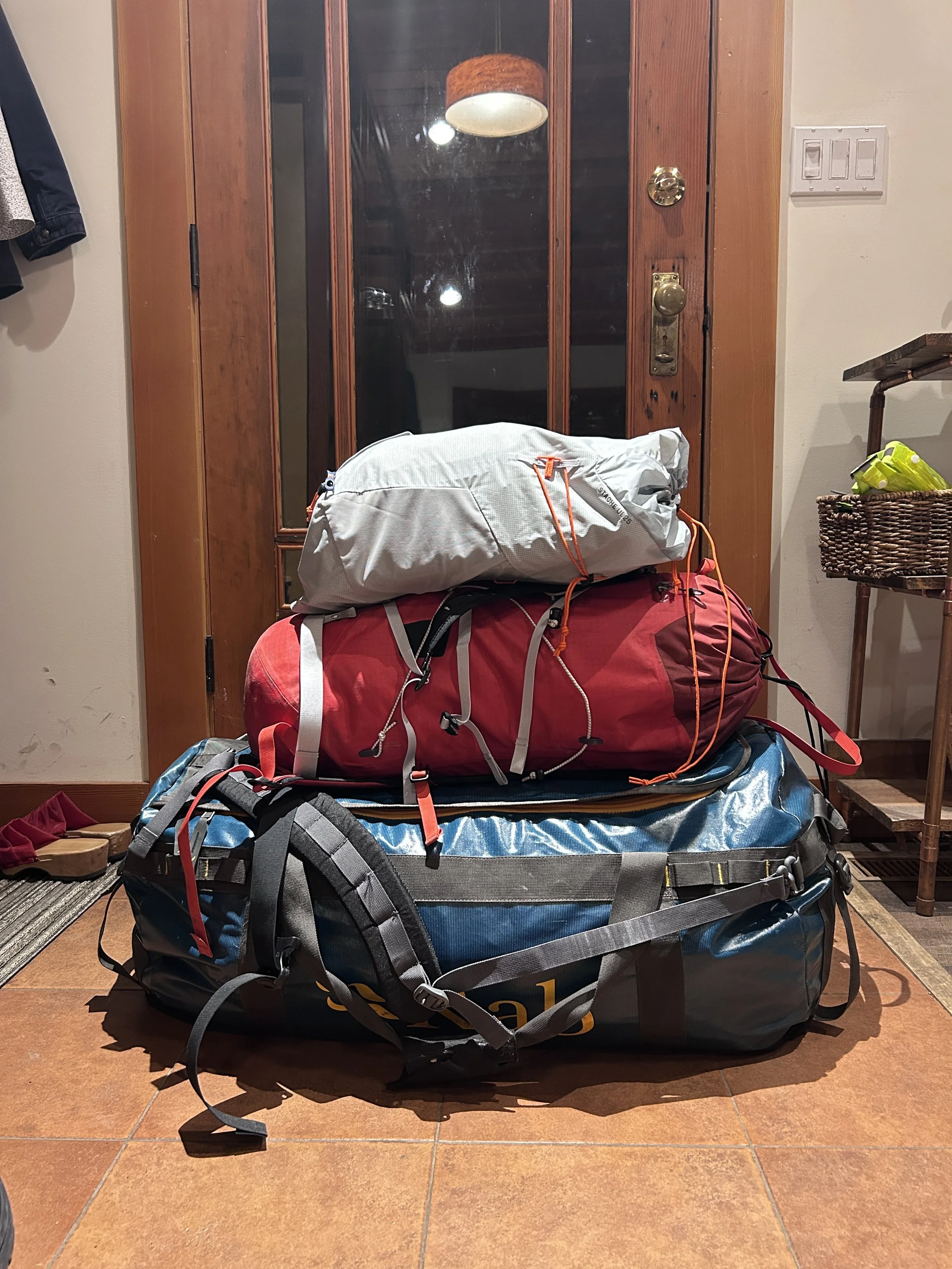
I stepped out of the air conditioned airport lobby into the muggy Buenos Aires summer, and within ten minutes my clothes were soaked through with sweat. In my rushed state, I flagged down the nearest taxi and told the driver in broken Spanish to get me to AEP as fast as possible. We zoomed off with the fare tracker not even running, and I knew I was about to get hit with the gringo rate. I justified my decision by telling myself it would still be cheaper than buying a new plane ticket. I was wrong.
The taxi dropped me at the front door of AEP. I didn't have time to argue the fare. I grabbed my bags, ran to the front of the check-in line, but it was too late. Boarding had started ten minutes ago. I ripped my duffel bag off the scale and sprinted up the stairs, trying to politely push through the security queue. Just as I allowed myself a glimmer of hope, my bags got pulled aside from the x-ray tunnel. Right. The ice tools, crampons, and all the other medieval-torture-device-looking gear packed inside. I hadn't slept in twenty-four hours and was visibly drenched in sweat. The security officer unzipped my duffel and raised his eyebrows at the contents. I became acutely aware that I looked like a completely deranged madman.
No amount of pleading or pantomimed mountaineering could convince him these tools were for climbing and not for killing. I watched the gate agent close the jetway door from across the terminal. I retreated out of the airport, sat down on a curb in the heat, and stared at the ground for a while. I'd just spent a day and a half in transit, hadn't slept, and now I had nothing to do but sit in Buenos Aires for another twenty hours with a duffel bag full of gear I couldn't bring through security. I rebooked a flight for the next day. It was only fifty bucks, which was less than half the price of my taxi ride. Ouch.
Planning to climb in Patagonia is like walking into a casino and b-lining for the roulette table with an over-eager desire to bet the farm on red. My trip was almost five weeks, which was about as long as I could afford on saved guiding wages. I'd been obsessively studying weather models in the weeks leading up to the trip, and every time a promising window appeared on the forecast and then shrank away, I'd just refresh until I found a new one a week out and decide I liked that model better. Friends warned me that a month was the absolute shortest time to plan if I wanted to be productive in the mountains of Patagonia, and I'd heard the stories of biblically epic weather that rips across the ice cap and slams into the Cerro Torre and Fitz Roy massifs. That didn't stop me from believing, every single time I refreshed the forecast, that the most optimistic model was also the most accurate.
When I finally arrived in Chalten by mid-afternoon the following day, a massive lenticular obscured the view of Fitz Roy, but the GFS was showing a promising window arriving in two days. It was all systems go.

We chose the mega-classic Chiaro di Luna on the west face of Aguja Saint-Exupery as our first objective. Chiaro di Luna is a 2,500-foot 5.10+ route with a reputation as the most splitter crack climb in the entire range. With a claim like that, how could we not? As it turned out, engaging with mountains in these ranges is far more dynamic and complex than simply picking a route and climbing it. We were about to start learning that.
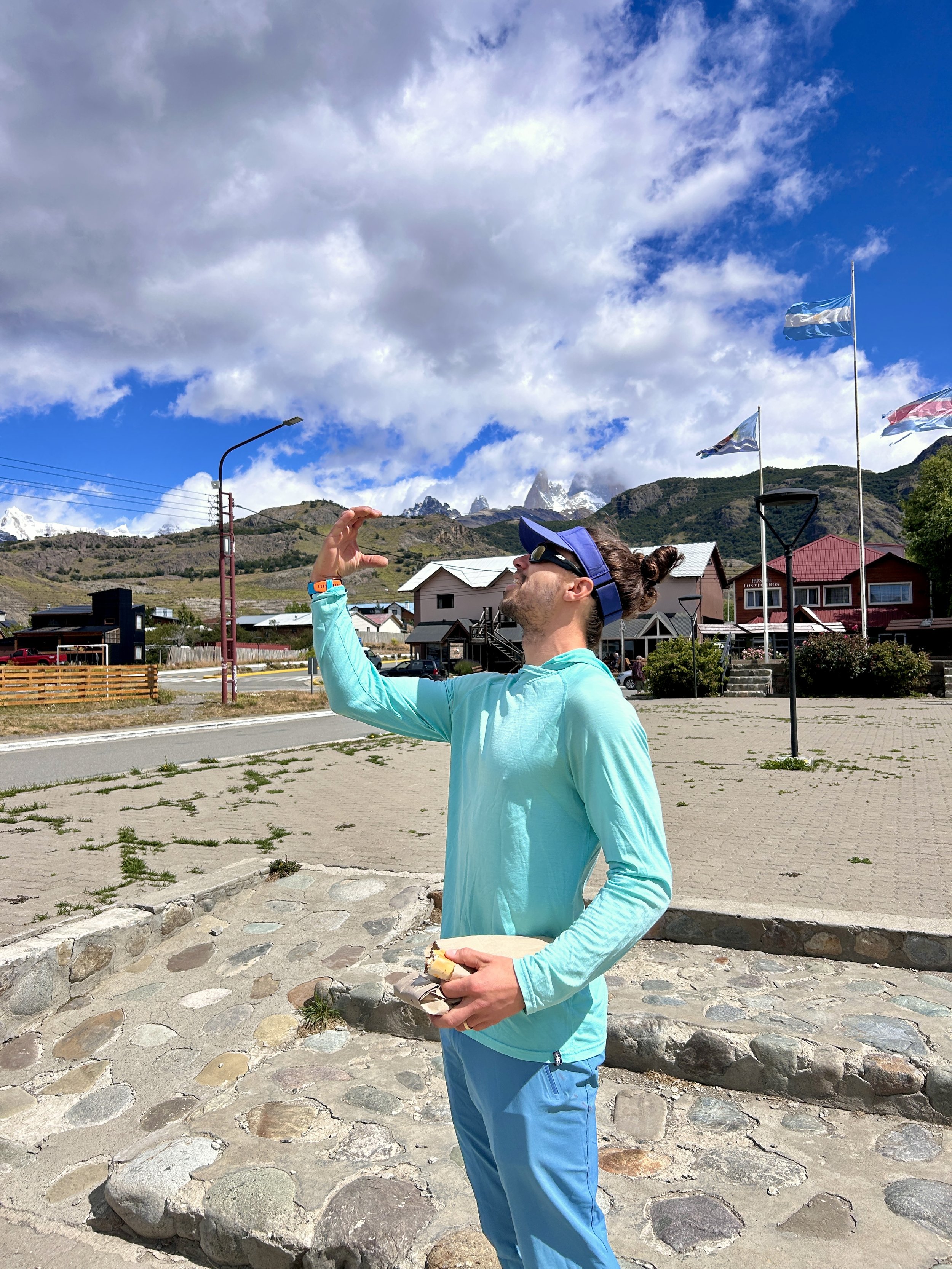
After a solid twelve hours of sleep, we packed up, grabbed empanadas for the road, and hit the trail. The excitement was palpable. Our overstuffed forty-pound backpacks were hardly noticeable; I don't think I've ever hiked that fast in my life. Hiking into the Torre Valley is walking straight into the belly of the beast with the jagged jaws of Cerro Torre and the surrounding peaks gnashing to the west and the hulking Fitz Roy massif rising to the east. I had dreamed of standing between these two iconic peaks my entire life. The dramatic history of alpinism unfolding on these walls played through the theater of my mind the entire nine-kilometer walk to Laguna Torre.
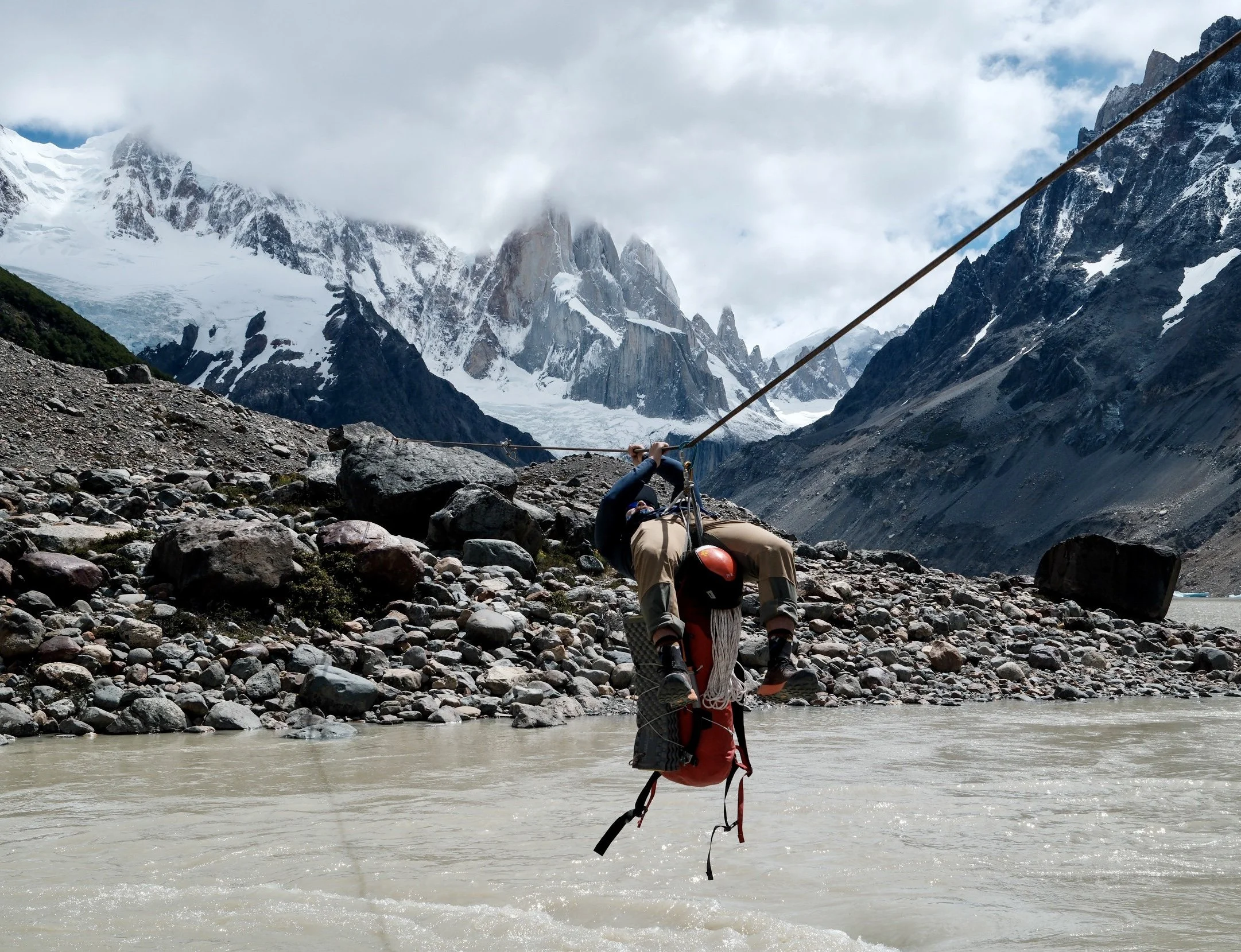
Beyond the lake, the trail climbs 1,500 feet up a moraine and drops you straight down onto the Torre Glacier. The lower glacier was dry, meaning there was no snow over the ice, so we navigated the labyrinth of crevasses and moulins unroped in approach shoes. A couple of hours later we arrived at Niponino, the first basecamp in the valley. There's another camp an hour further, perched up on the western moraine, called Polacos. Polacos is a more advantageous starting point for Aguja Saint-Exupery, but it was 8 PM and we'd already been moving for seven hours. We set our alarms for 3 AM and wormed into our sleeping bags for a brief nap.
I lay there in the fading light with the outline of rugged granite peaks pressed into the backs of my eyelids. I could not believe that I was there. Surely this was a dream and I’d wake up back in my bed in Portland. It was real. I was there. I know because I didn’t sleep a wink that night.
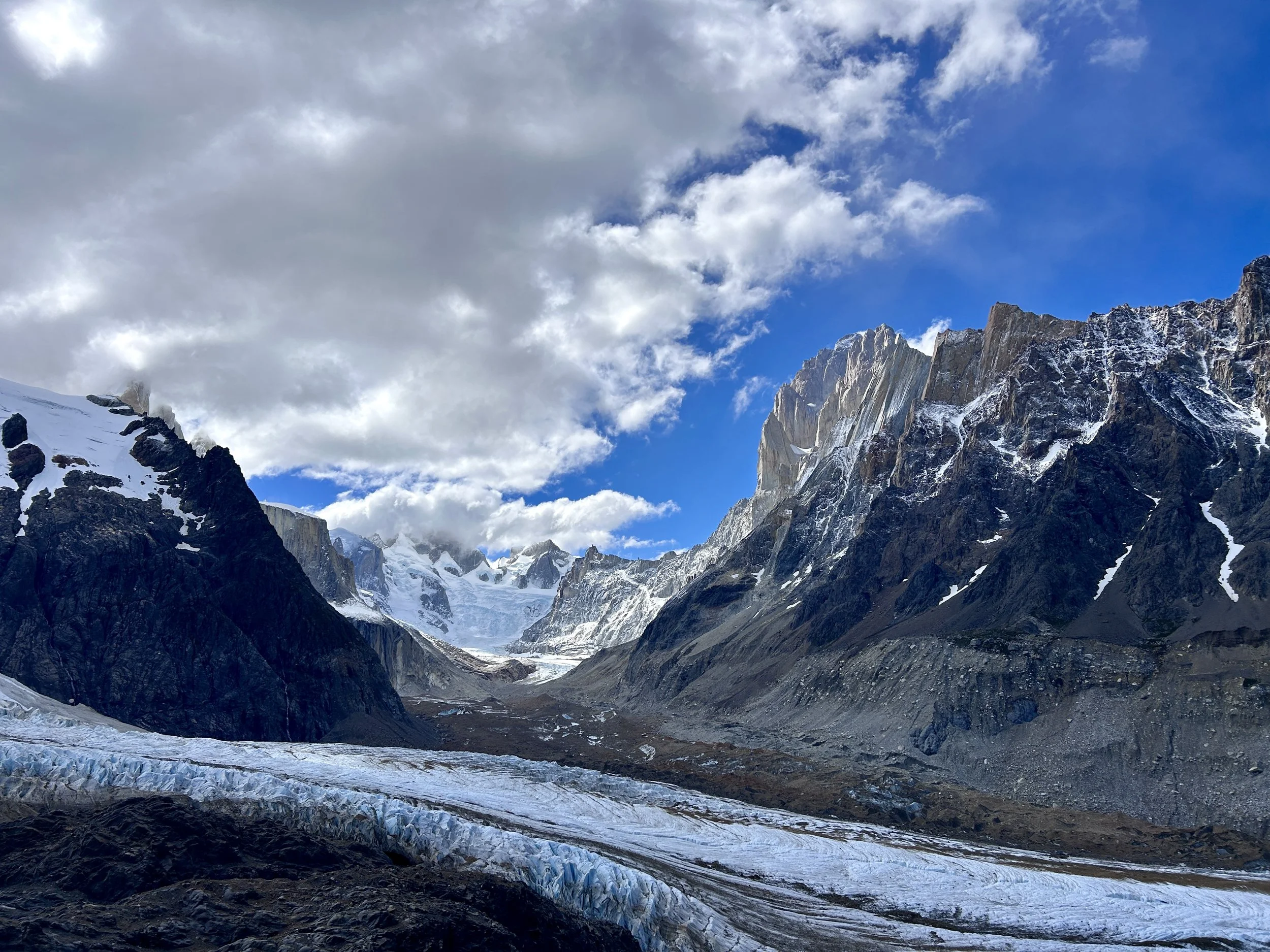
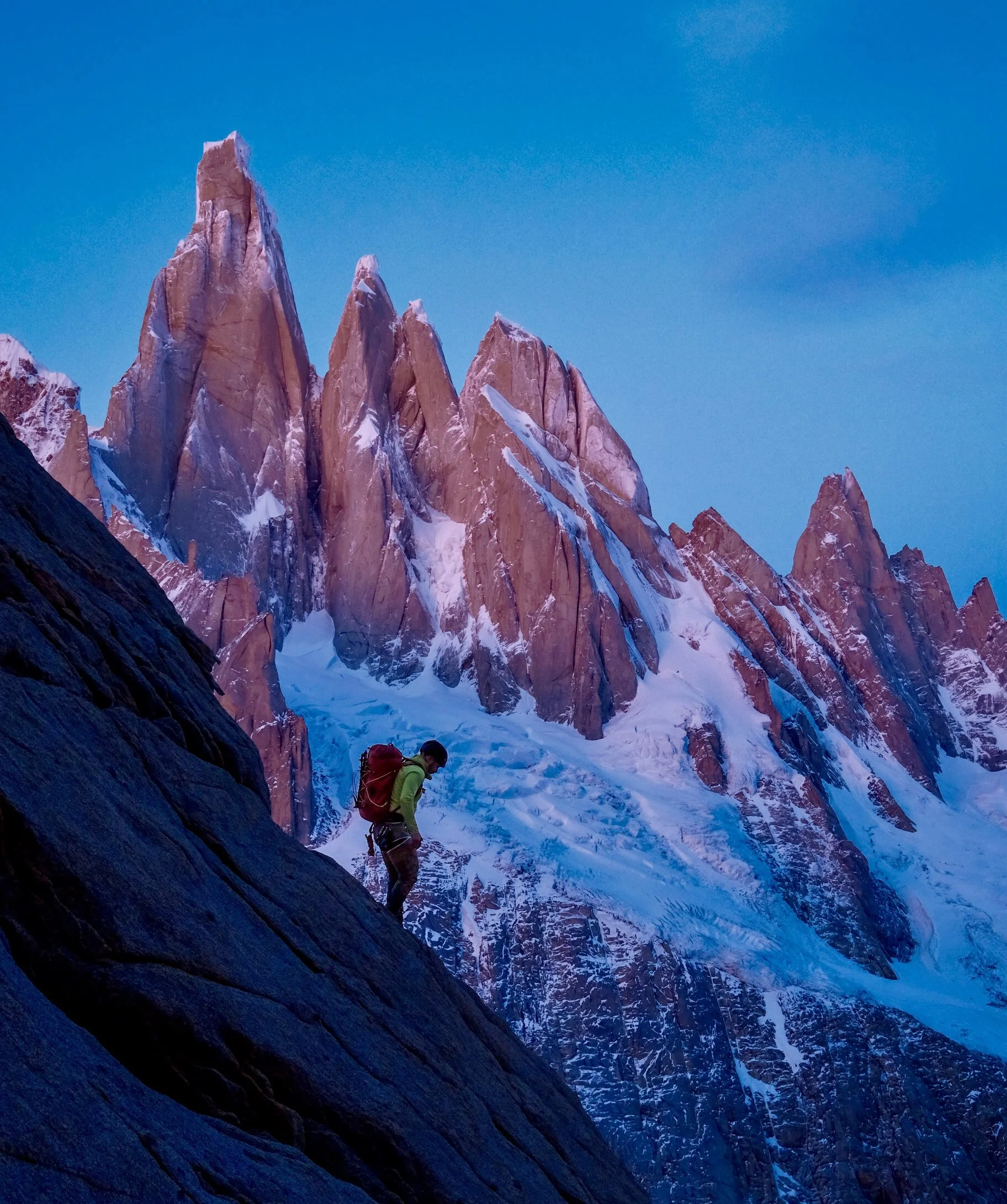
At 3 AM we grabbed our bags and stumbled into the dark, picking our way up the loose moraine talus toward the approach gully. We followed the wrong gully too high and ended up waiting for sunrise to figure out where we were. The correction involved a lot of downclimbing and a rappel, but it wasn't all bad. We got to watch the most inspiring sunrise I've ever seen illuminate the east face of Cerro Torre and the surrounding peaks. The pink alpenglow on the sharp granite spires contrasted with the piercing blue sky and small puffball clouds made our jaws drop. It was a raging torrent of color and texture. Getting off route had shaken my confidence, but Nate's pure motivation kept us moving. A good partner picks up the slack. One of the many reasons I love climbing with Nate.
We reached the true base of the route around 8 AM. The extent of the prior storm was immediately apparent: we were climbing ice and snow in crampons up the basalt dike that usually marks the start of the rock climbing. The 5.10+ crux comes early on Chiaro di Luna, typically the third rock pitch, but it was our first dry pitch of the day. Nate took the lead on the glorious layback finger crack crux pitch. I have no doubt this would be the most-climbed pitch on earth if it were at a crag. It's that good. Remarkably, the crack had no ice choked into it, something we'd be forced to deal with on every pitch above.
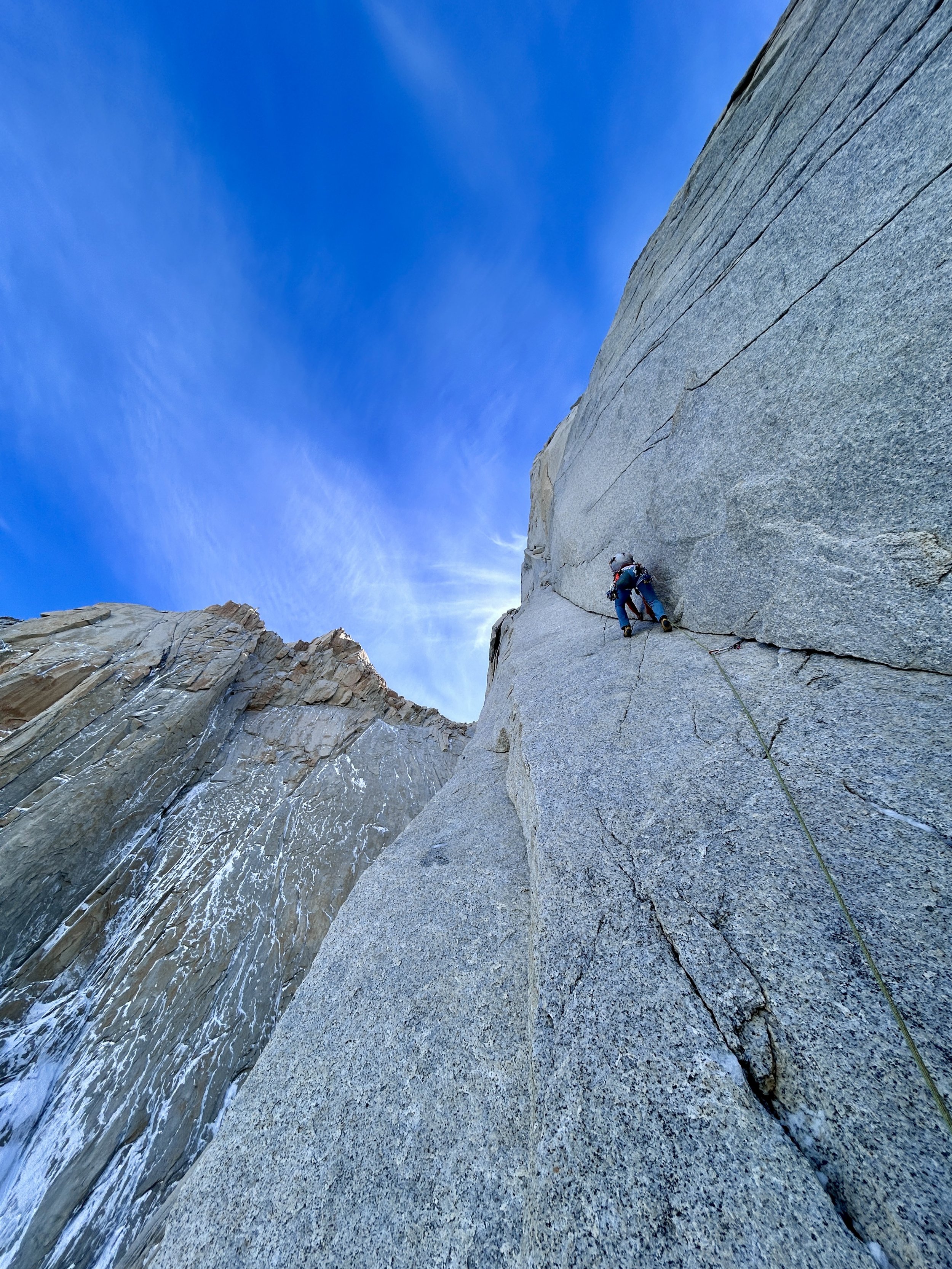
We continued swapping leads as the route spiraled around the lower buttress, linking crack systems upward. The pitches above the crux were lower-angle, which made for faster climbing but also meant that ledges and cracks were loaded with ice. Every move, the leader would have to dig in and excavate before placing gear. Our fingers got cold and wet.
Chiaro di Luna isn't a terribly committing route, as long as you make it to where the Kerney-Harrington joins the west face from the north side, about three-quarters of the way up. The standard descent rappels the Kerney-Harrington to the top of a giant snow gully. The traversing nature of Chiaro di Luna makes rappelling the route expensive in gear.
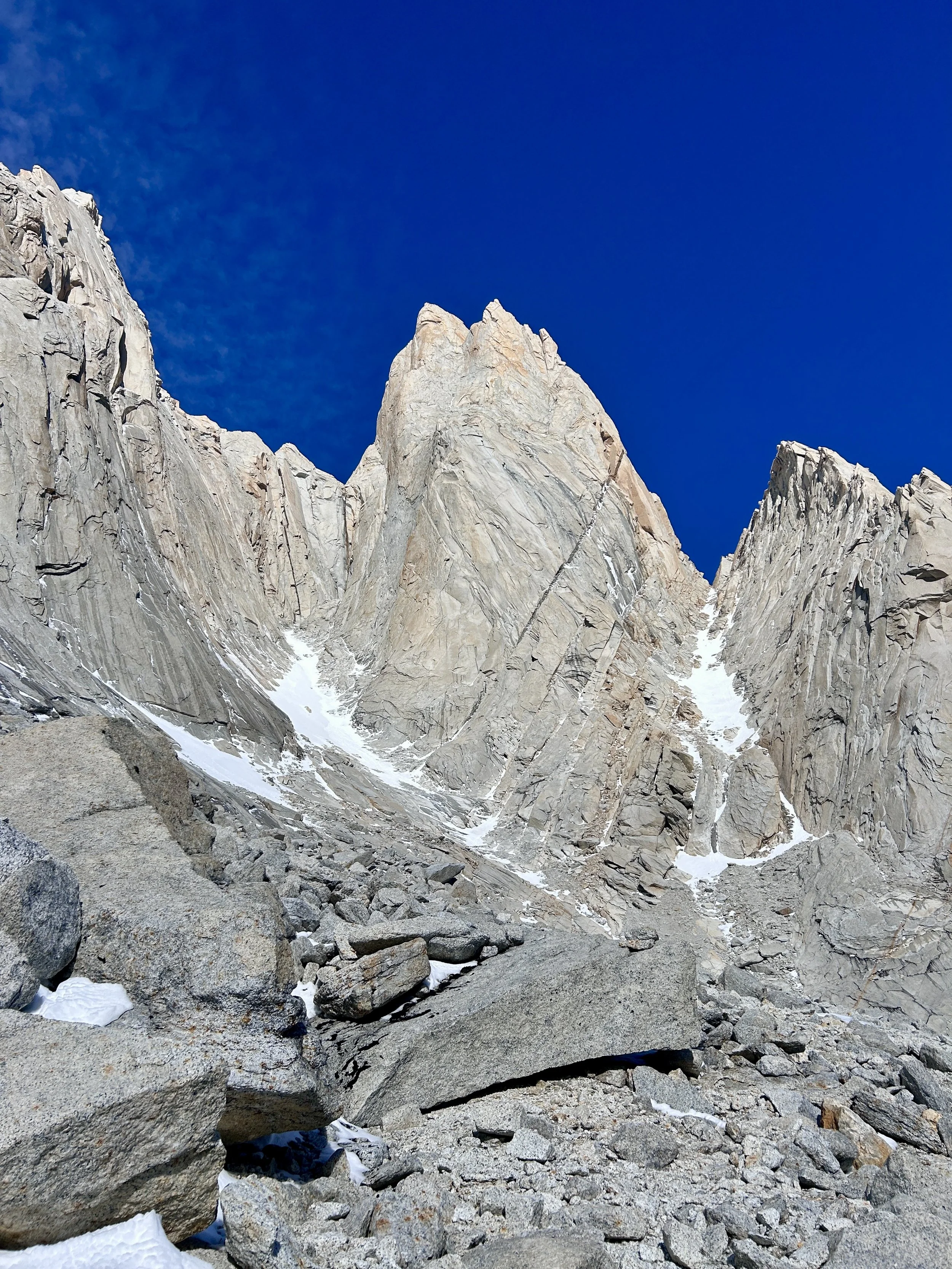
At 1 PM we reached a giant low-angle slab that stretched nearly seventy meters. The climbing was easy but gear placements were sparse. I led about halfway up to a small stance, where I believed the topo told us to cut left and climb a short headwall. Nate took over and climbed halfway up the headwall before the terrain turned improbable. While belaying him I spotted old anchor tat higher on the slab and realized we'd drifted off route. Nate had made the same realization at the same moment and began downclimbing while he still could. He reached the tat, set up an anchor, I handed over the gear, and he charged on.
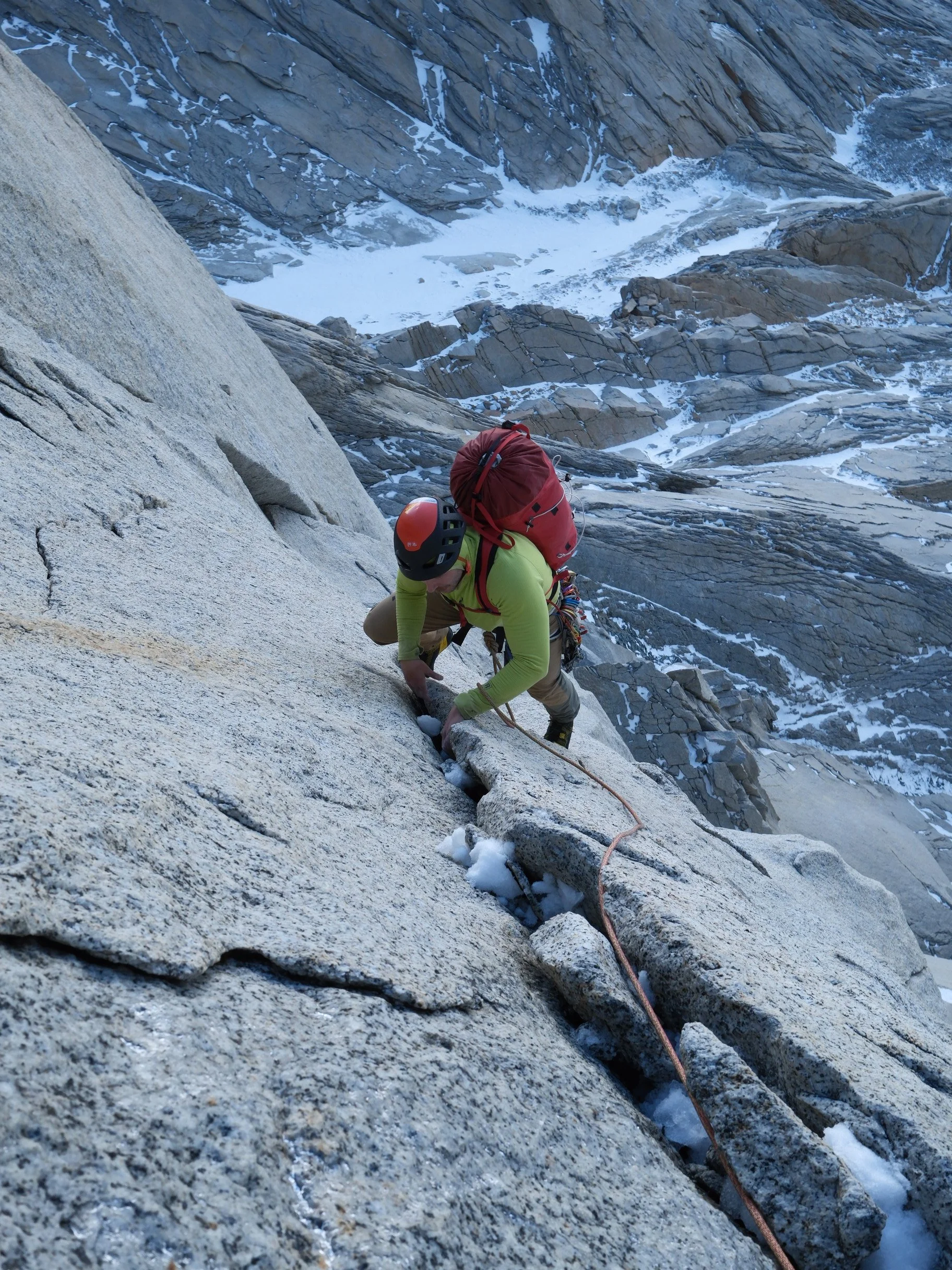
The sun had swung around to the west face by early afternoon, and we basked in it to dry our layers and warm our hands. Then all the ice in the cracks above us started melting. The face began to seep, a snow pocket above us turned into a small waterfall, and the entire headwall ran with water. I could feel Nate's progress and retreats through the rope. It would stretch out taut, then slack would pool back at my belay device. Challenging, wet, possibly off route, probably all three. His final attempt was a hard leftward traverse into a steep corner that would require aiding several moves, and I'd have to follow it with several giant lower-outs to prevent a massive pendulum fall. We'd been working the pitch for well over an hour. My legs were going numb from the small pedestal I was belaying from. A few cams left behind later, Nate was back at the anchor. Water was now pouring down the slab above us.
We rappelled one pitch to a giant ledge to take stock of our options.
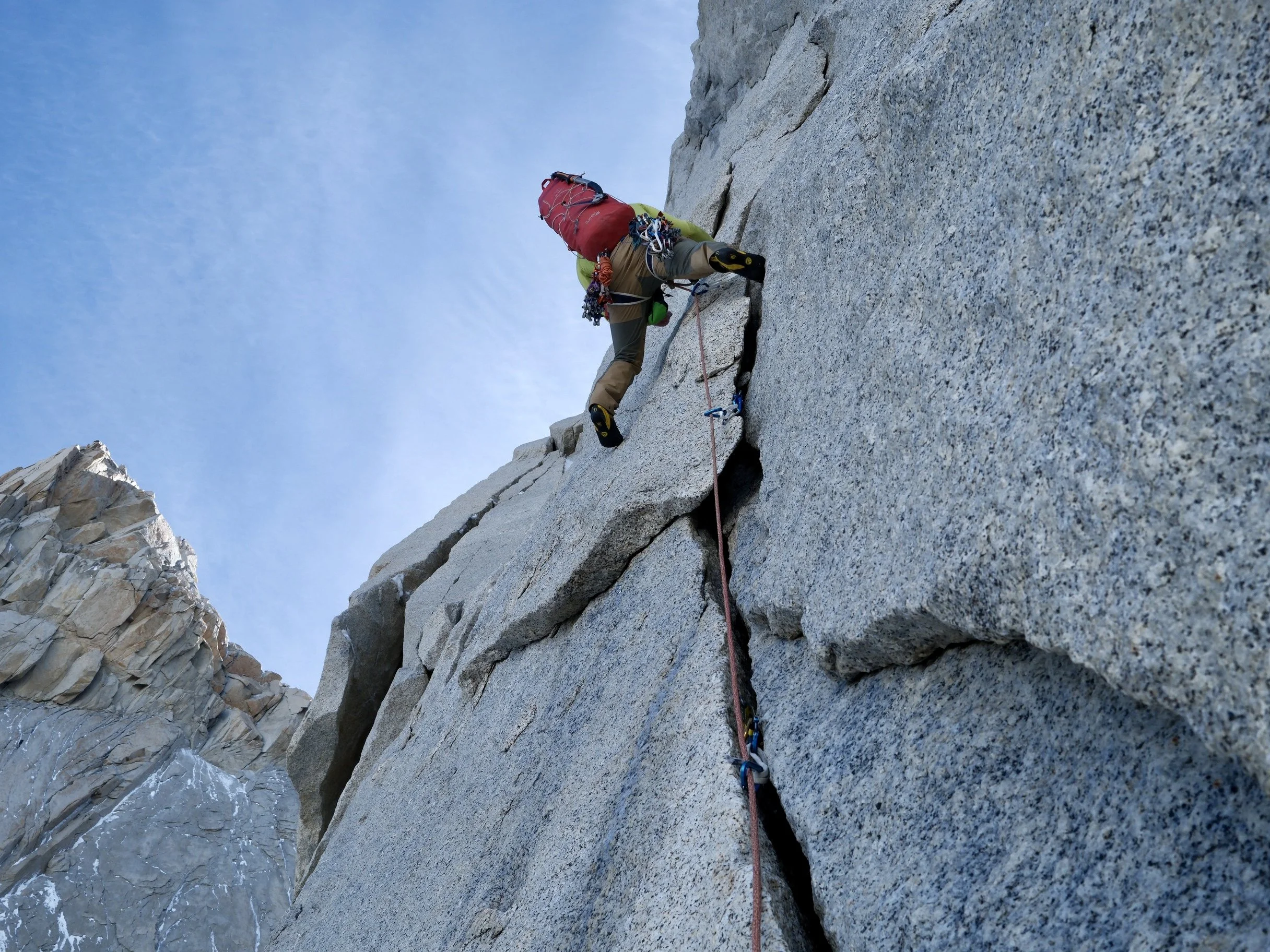
Summiting Aguja Saint-Exupery was off the table. No question there. The harder question was whether to push up to the Kerney-Harrington junction for a cleaner descent, or to bail from here and leave gear. I sat on that ledge and felt the particular weight of a decision you already know the answer to. The weather window was just twenty-four hours. Continuing upward would mean descending through the night in deteriorating conditions, and this was essentially only our second day in Patagonia. We hadn't earned an epic yet. But more than that, I didn't want our first real experience in these mountains to become a survival situation that left us too beaten up to go back. We'd gotten a taste of the climbing and it was extraordinary. Rappelling the route felt like the only decision that would preserve our appetites for a return.
We began our descent.
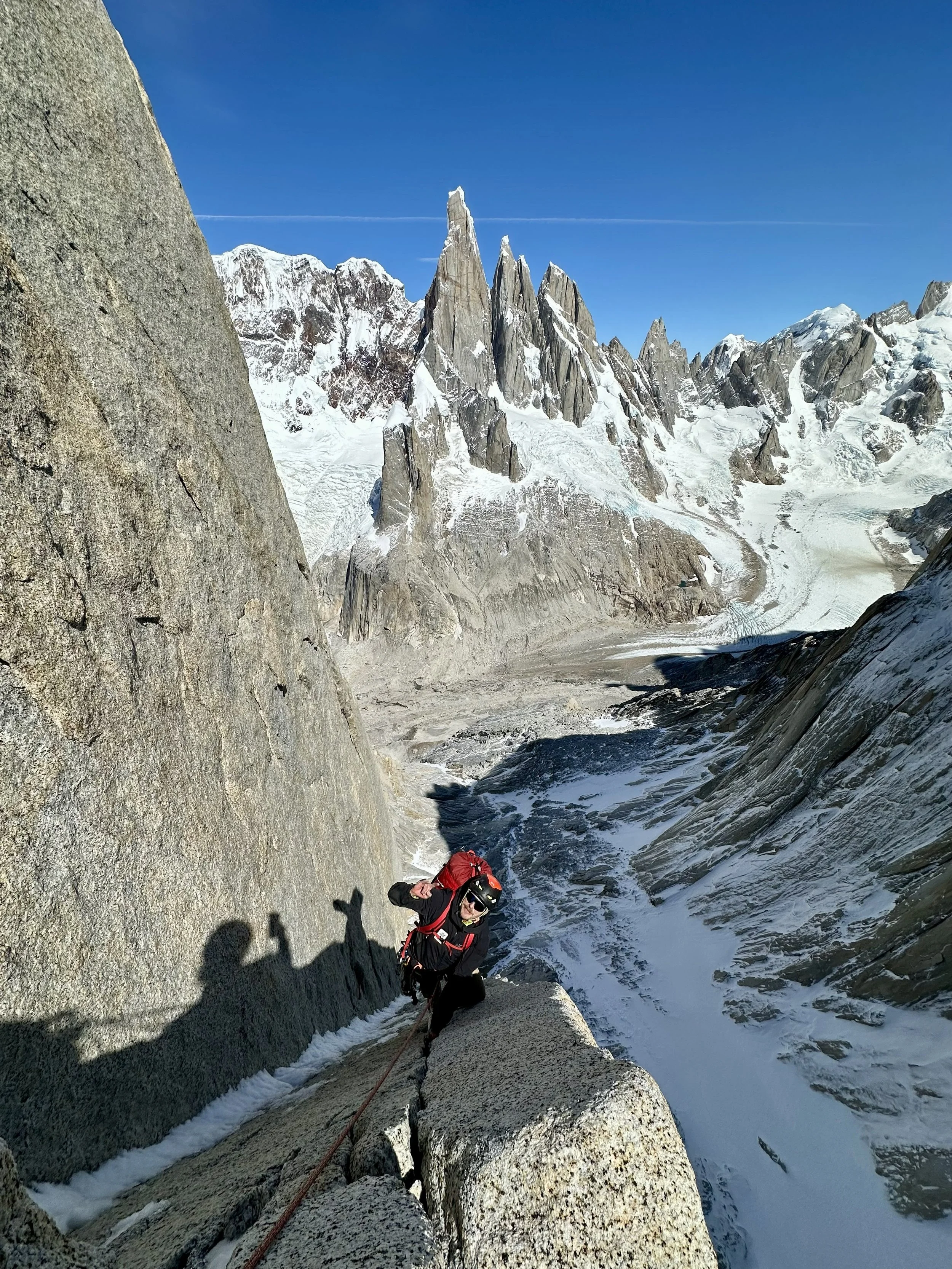
Rappelling Chiaro di Luna was uneventful. We weren't the first to retreat mid-route, so old anchors were there to find. We cut and replaced the cord on most of them on the way down, adding nuts to reinforce a few.
At the base, we coiled the ropes and postholed down the now-slushy snow gully toward camp. This time we could actually see the correct approach gully from above, so the descent went quickly. We were back at the tent by 7 PM. We scarfed our dehydrated meals, debated caching gear for a return trip, and drifted off to sleep mid-conversation, exhausted.
Neither of us managed much sleep. As we'd descended, high clouds had overtaken the blue sky and wind had begun whipping through the valley. By 11 PM, sand and pebbles were sporadically spraying against the tent wall like a snare drum. Violent gusts pressed the tent fabric down over us.
At 3 AM, it started to rain.
Nate sat straight up. I just grumbled. If I ignored it long enough, maybe the storm would reconsider. Which is not exactly how mountains work. With a little resistance on my end, we decided it was past time to get out of the valley.
We haphazardly stuffed gear into our bags and felt our way into the dark, headlamps carving small patches of moraine out of the blackness. Gusts caught our backpacks and blew us sideways until we adopted a hunched crawl just to stay attached to the earth. Once we reached the glacier, we practically slid across the surface. Navigating in the dark felt like wandering through a corn maze: we'd follow a small valley until it dead-ended in a moraine we hadn't seen coming, then backtrack and find a way around.
Eventually the sun crept over the mountains and we sat down on a pile of rocks for a well-deserved breakfast of corn nuts and cookies. I'd been ripped off by a taxi, missed a flight, gotten lost on the approach, retreated mid-route, and was now sitting in the dirt in a rainstorm eating corn nuts at 6 AM. I couldn't stop smiling. We were already debating what to climb next.
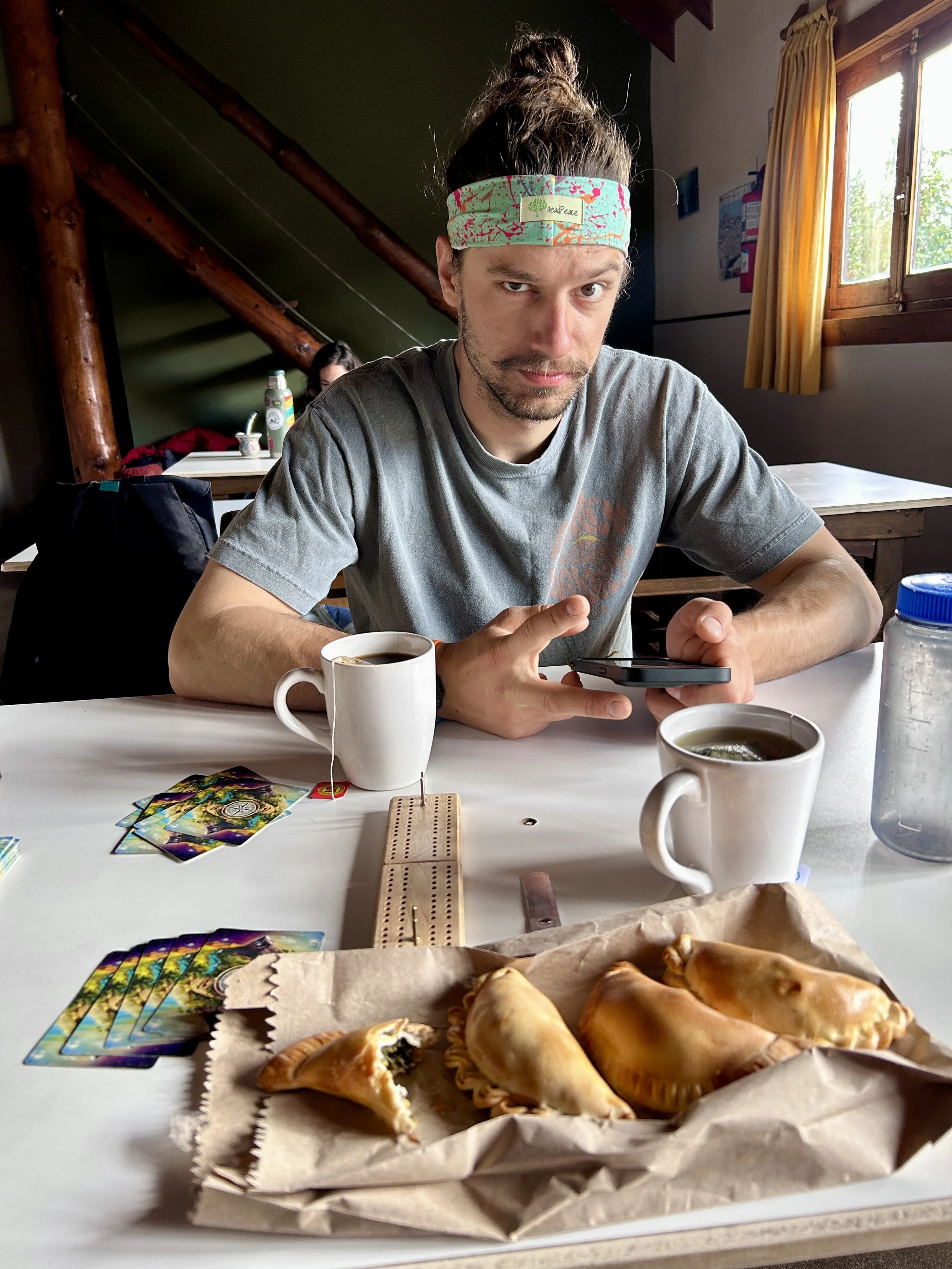
N.B. Many of the photos, and all of them that are of Koby, were taken by the Nate Lynch